
Many homeowners in Georgia are surprised when they compare their property assessment to a nearby home and discover a significant difference in value. This often leads to an important question:
Why is my property assessed higher than my neighbor’s?
Understanding how property assessments work can help homeowners determine whether the difference may be reasonable — or whether it could be worth reviewing further.
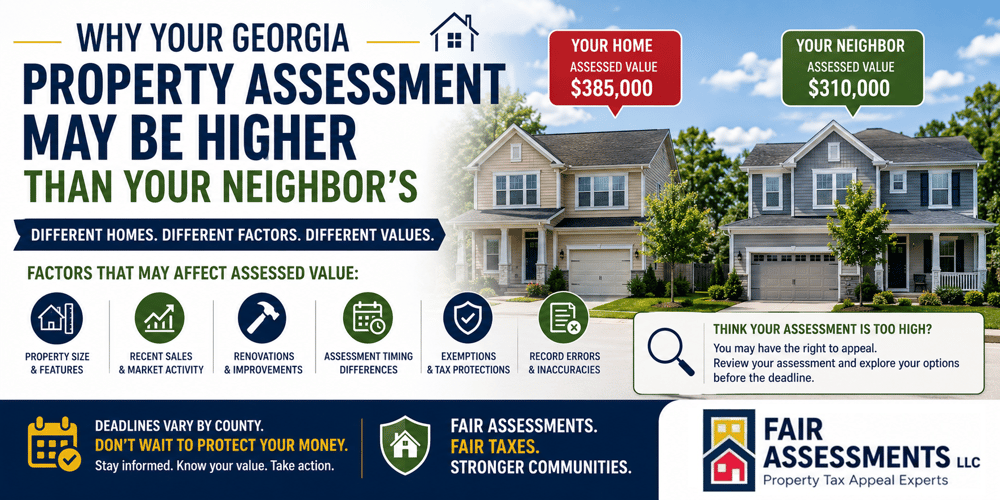
Property Assessments Are Not Always Identical
Even homes located on the same street may have different assessed values.
County assessors consider multiple factors when determining a property’s fair market value, and small differences between properties can sometimes create noticeable assessment changes.
Factors That May Affect Property Assessments
Several details may influence why one property is assessed differently than another.
Property Size and Features
Differences in:
- Square footage
- Lot size
- Number of bedrooms or bathrooms
- Garages
- Basements
- Renovations or upgrades
can all affect assessed value.
Even homes that appear similar from the outside may have meaningful interior differences.
Recent Sales and Market Activity
Assessments are often influenced by:
- Recent nearby home sales
- Market appreciation
- Neighborhood demand
- Local development activity
If one property recently sold at a higher price, it may impact surrounding valuations.
Renovations and Improvements
Properties with:
- Kitchen remodels
- New additions
- Upgraded finishes
- Pools
- Finished basements
- Major repairs
may receive higher assessments compared to nearby homes without similar improvements.
Assessment Timing Differences
Assessment updates do not always affect every property equally or at the same time.
One homeowner may:
- Have appealed successfully in prior years
- Qualify for certain protections
- Have received adjustments at different times
This can sometimes create temporary differences between neighboring properties.
Homestead Exemptions and Tax Protections
Some Georgia homeowners qualify for exemptions or assessment limitations that affect taxable value.
These protections may make neighboring tax bills appear significantly different even if market values are similar.
County Records May Contain Errors
In some cases, assessment differences may result from inaccurate county records, including:
- Incorrect square footage
- Wrong property features
- Duplicate improvements
- Incorrect condition ratings
Reviewing county records carefully can help homeowners identify possible inaccuracies.
When Should Homeowners Be Concerned?
A higher assessment does not automatically mean the valuation is incorrect. However, homeowners may want to review their assessment more closely if:
- The increase seems unusually large
- Comparable homes appear significantly lower
- Property details are inaccurate
- Market conditions do not support the value
- The assessment changed dramatically in one year
How to Compare Your Property Properly
When reviewing neighboring properties, homeowners should compare:
- Similar home styles
- Similar square footage
- Similar lot sizes
- Similar condition and upgrades
- Recent comparable sales
Accurate comparisons are important when evaluating fairness.
Can You Appeal a Higher Assessment?
Yes. If homeowners believe their property has been overassessed, they may have the right to file a property tax appeal within county deadlines.
Supporting evidence may include:
- Comparable sales
- Property photos
- Appraisals
- Repair estimates
- Market analysis information
A successful appeal may reduce assessed value and potentially lower property taxes.
Final Thoughts
There are many reasons why a Georgia property assessment may differ from a neighbor’s, and not every difference indicates a problem.
However, reviewing your assessment carefully, checking county records, and understanding local market conditions can help homeowners determine whether their property is being assessed fairly and whether further action may be appropriate.