
Many homeowners in Gwinnett County assume their property records are automatically accurate year after year. However, county property records may sometimes contain errors or outdated information that can potentially affect property assessments and property taxes.
Reviewing property records annually may help homeowners identify inaccuracies early, monitor assessment changes, and determine whether a property tax appeal may be appropriate.
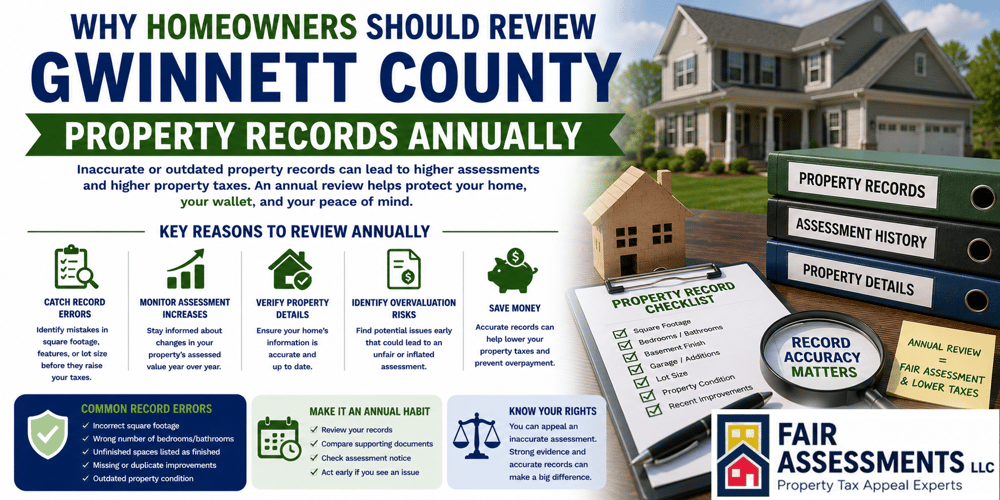
Why Property Records Matter
County property records are commonly used during the property assessment process.
These records help assessors estimate:
- Fair market value
- Assessed value
- Taxable value
- Annual property tax obligations
If county records contain inaccurate information, the property assessment itself may also become inaccurate.
What Information Is Included in Property Records?
Gwinnett County property records may contain details such as:
- Square footage
- Lot size
- Bedrooms and bathrooms
- Finished basements
- Garages and additions
- Property features
- Renovation history
- Building characteristics
Assessors often rely heavily on this information when estimating market value.
Why Annual Review Is Important
Property records and assessments may change over time.
Annual review may help homeowners:
- Catch new record errors
- Monitor assessment increases
- Verify property characteristics
- Identify possible overvaluation concerns
- Track market trends
Regular monitoring may help reduce long-term overassessment risks.
Common Property Record Errors
Several common inaccuracies may affect property assessments.
Incorrect Square Footage
One of the most common issues involves overstated living area or building size.
If county records show more square footage than the property actually contains, the assessed value may increase unnecessarily.
Incorrect Property Features
Records may incorrectly list:
- Extra bathrooms
- Additional bedrooms
- Finished basements
- Pools
- Garages
- Detached structures
Features that do not exist may potentially inflate property value.
Duplicate Improvements
Additions or improvements may occasionally be counted more than once within county records.
Incorrect Lot Information
Lot size or land characteristics may also affect value calculations.
Property Condition Issues
County records may fail to reflect:
- Deferred maintenance
- Structural concerns
- Water damage
- Outdated interiors
- Needed repairs
Properties with condition problems may not realistically sell for the same amount as fully updated neighboring homes.
How Property Record Errors Affect Taxes
Property taxes are closely tied to assessed value.
If county records overstate property characteristics, the county may estimate a higher fair market value than the property would realistically sell for under current market conditions.
This may potentially result in:
- Higher property taxes
- Increased assessed value
- Larger escrow payments
- Long-term overpayment
Why Comparable Sales Matter
Comparable sales, often called “comps,” are frequently used to estimate fair market value.
If county records incorrectly describe a property, the county may compare it to homes that are:
- Larger
- More updated
- Better maintained
- More valuable
This may potentially lead to unfair comparisons and inflated assessments.
How Homeowners Can Review Property Records
Homeowners may want to compare county records against:
- Appraisals
- Inspection reports
- Property surveys
- Floor plans
- Closing documents
- Actual property measurements
Careful comparison may help identify discrepancies.
What Evidence May Help Correct Errors?
Useful documentation may include:
- Property photos
- Surveys
- Appraisals
- Inspection reports
- Contractor estimates
- Floor plans
- Measurement records
Strong evidence may help support correction requests or property tax appeals.
Can Property Record Errors Be Appealed?
Yes.
Homeowners may often challenge inaccurate assessments caused by county record errors through the property tax appeal process.
Correcting inaccurate information may potentially lower the assessed value and reduce property taxes.
Common Mistakes Homeowners Make
Some homeowners weaken their review process by:
- Assuming county records are automatically correct
- Ignoring square footage discrepancies
- Failing to verify finished basement classifications
- Waiting too long to review assessment notices
Careful annual review may help reduce these risks.
Why Professional Guidance May Help
County record review and property valuation analysis can sometimes become complicated.
Professional guidance may help homeowners:
- Identify record discrepancies
- Analyze comparable sales
- Review assessment accuracy
- Organize supporting evidence
- Prepare stronger appeal support
This may improve the effectiveness of a property tax appeal.
Final Thoughts
Reviewing Gwinnett County property records annually may help homeowners identify inaccuracies that could potentially increase property taxes unnecessarily.
By verifying important property details, monitoring assessments carefully, and responding quickly to possible errors, homeowners may improve their ability to maintain fair and accurate property tax assessments while potentially reducing unnecessary property tax costs.