
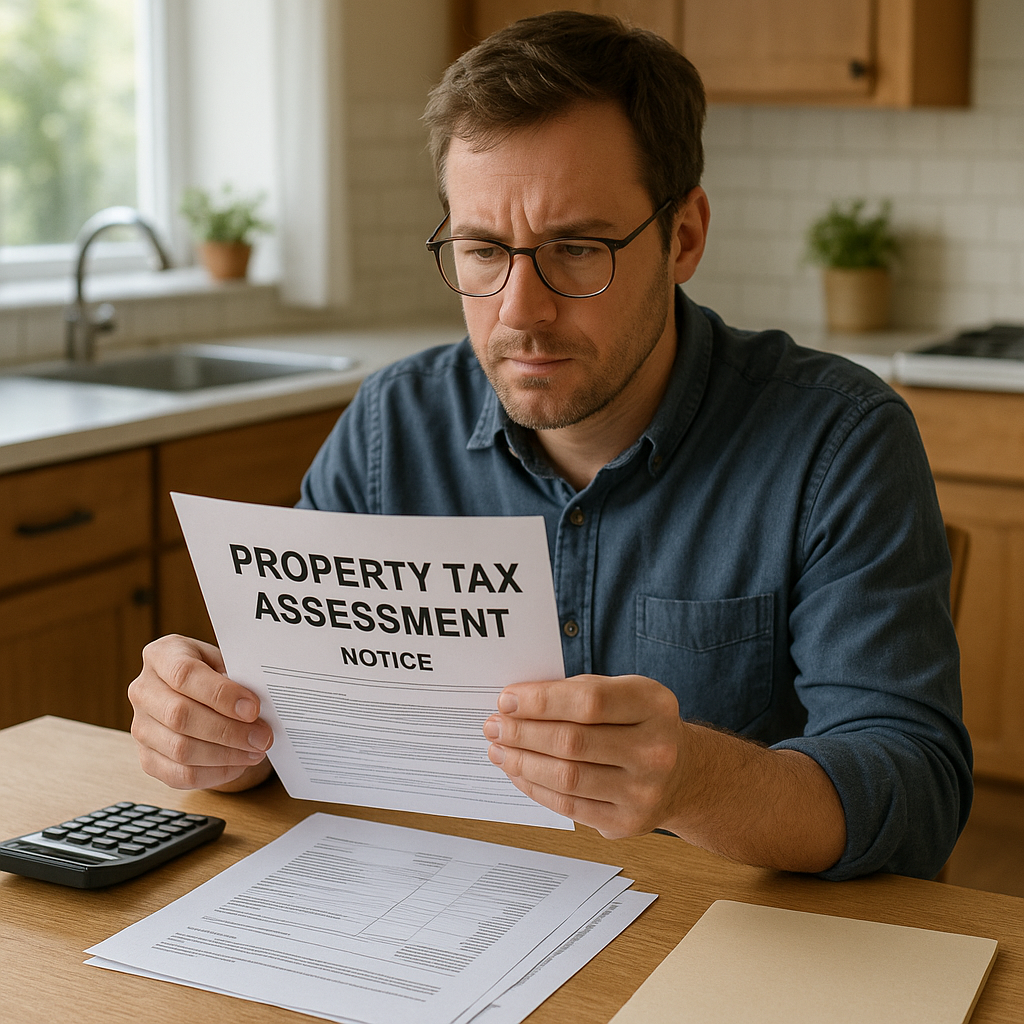
Your property tax assessment notice just landed in your mailbox—here's your essential action plan to ensure you're paying a fair amount and not leaving money on the table.
Understanding What Your Assessment Notice Actually Tells You
When your property tax assessment notice arrives, it's more than just another piece of mail—it's a document that directly impacts your financial obligations for the coming year. The notice contains several critical pieces of information: your property's assessed value, the deadline to appeal the assessment, a reason for any change in assessment, and often a comparison to the previous year's assessment. Understanding these components is the first step in determining whether your assessment is fair and accurate.
The assessed value represents what the county believes your property is worth for tax purposes. This figure is multiplied by the applicable millage rate to calculate your property tax bill. Many homeowners mistakenly assume this value is set in stone, but it's actually an opinion of value that can—and should—be questioned if it doesn't reflect market reality. Pay particular attention to any significant increases from the prior year, as these warrant closer scrutiny.
Your assessment notice will also indicate important dates, including the deadline for filing an appeal with your county's Board of Assessors. In Georgia, this deadline is typically 45 days from the date the assessment notice is mailed. Missing this deadline can mean waiting another year to challenge an unfair assessment, potentially costing you thousands of dollars. Put the deadline on your calendar so you don't forget.
Compare Your Assessment to Market Reality
Once you understand what your assessment notice tells you, the next step is to determine whether the assessed value aligns with actual market conditions. Start by researching recent sales of comparable properties in your neighborhood—properties with similar square footage, lot size, age, condition, and features. Online real estate platforms, county tax records, and multiple listing service data can provide valuable insight into what similar homes have actually sold for in your area.
It's important to focus on sales that occurred within the appropriate time frame for your county's assessment. In Georgia, assessments are typically based on fair market value as of January 1st of the tax year. Look for comparable sales from the six to twelve months preceding that date to build the most relevant comparison. If comparable properties sold for significantly less than your assessed value, you may have grounds for an appeal.
Don't overlook the condition and unique characteristics of your property. While your assessment notice shows what the county believes your property is worth, assessors work with limited information and sometimes make errors. Perhaps your property has deferred maintenance, an outdated interior, or functional issues that weren't captured in the county's valuation. Conversely, if you've made significant improvements that justify a higher value, the assessment may actually be accurate. The key is objective comparison—removing emotion from the equation and focusing on factual, market-based evidence.
The Appeal Process
The appeal process follows a specific sequence. Your first step is filing a formal appeal with the county Board of Assessors, which requires completing the appropriate forms and providing supporting documentation. If you're unsatisfied with the Board of Assessors' decision, you have the right to appeal to the county Board of Equalization, and from there to Superior Court if necessary. Each stage has its own deadlines and procedural requirements, making it essential to understand the timeline and follow proper protocol.
Different counties may have slightly different procedures, forms, and hearing schedules. Some counties offer online filing options, while others require paper submissions by mail or in person. Familiarize yourself with your specific county's requirements early in the process. DeKalb, Fulton, Cobb, and Gwinnett counties each have their own nuances in how they handle appeals. Don't assume the process is identical across jurisdictions—verify the specific requirements for your county's Board of Assessors to avoid procedural mistakes that could undermine your appeal.
Gathering the Right Evidence to Support Your Case
A successful property tax appeal relies on solid, objective evidence that demonstrates your property's assessed value exceeds its fair market value. The most persuasive evidence typically comes from recent sales of comparable properties. Gather data on at least three to five truly comparable properties that have similar characteristics including square footage, lot size, age, condition, number of bedrooms and bathrooms, and architectural style. Document the sale prices, sale dates, and specific features of each comparable property.
Photographs can be powerful evidence, particularly if your property has condition issues, deferred maintenance, or functional obsolescence that isn't reflected in the county's assessment. Take clear, dated photos of any significant defects, needed repairs, outdated systems, or features that negatively impact value. If your neighborhood has external factors affecting property values—such as increased traffic, commercial encroachment, or environmental concerns—document these as well. The goal is to paint a complete, factual picture of your property's true market value.
Organize your evidence in a clear, professional manner. Create a spreadsheet or comparison chart showing how your property stacks up against the comparables you've selected. Include property record cards, recent appraisals if available, listing histories, and any other documentation that supports your position. In Georgia the burden of proof is on the tax assessors to support their value, but you need to prove that the value is excessive. County hearing officers and Board of Equalization members review numerous cases, so making your argument easy to follow and supported by concrete data significantly increases your chances of success.
When Professional Guidance Makes the Difference
While some property owners successfully handle straightforward appeals on their own, many situations benefit from professional expertise. Complex commercial properties, properties with unique characteristics, cases involving substantial assessment increases, or situations where you've already attempted an unsuccessful appeal often require the specialized knowledge of experienced property tax consultants. Professionals who formerly worked as county assessors bring invaluable insight into how assessments are generated and what arguments are most effective in your specific county.
The value of professional guidance extends beyond just knowledge of valuation methods. Experienced property tax consultants understand the procedural nuances, know how to present evidence persuasively, have established relationships with county officials, and can navigate the hearing process with confidence. They've attended hundreds of Board of Equalization hearings and understand what constitutes compelling evidence versus what falls flat. This experience translates into higher success rates and often larger reductions than property owners achieve on their own.
When evaluating whether to hire a professional, consider both the potential tax savings and the complexity of your situation. For residential properties with significant over-assessments, many consultants offer flat-fee arrangements that provide cost certainty. For commercial properties or cases with substantial dollar amounts at stake, contingency fee arrangements align the consultant's interests with yours—they only get paid when they achieve savings. Either way, professional representation can save you time, reduce the stress of navigating an unfamiliar process, and often results in outcomes that far exceed the cost of the service. With decades of experience in real estate valuation and intimate knowledge of Georgia county assessment practices, the right professional can be the difference between an unsuccessful DIY attempt and meaningful tax relief.