
When homeowners receive a property assessment notice in Georgia, one of the most important terms they see is “fair market value.”
But what exactly does fair market value mean, and how does it affect property taxes?
Understanding this concept can help homeowners better evaluate their assessment notices and determine whether their property may have been overvalued.
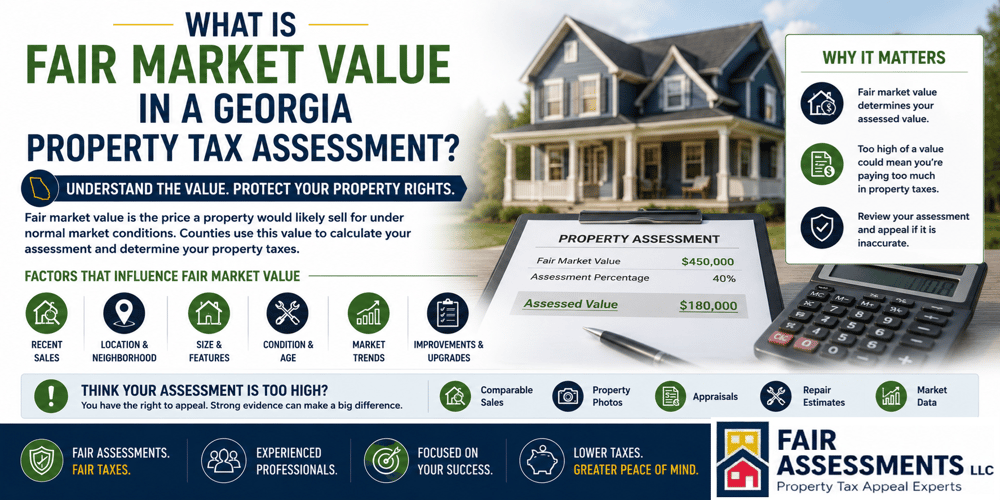
What Is Fair Market Value?
Fair market value generally refers to the estimated price a property would likely sell for under normal market conditions.
In property tax assessments, counties use fair market value as the foundation for calculating assessed value and determining property taxes.
The goal is to estimate what a willing buyer would reasonably pay a willing seller in the current market.
How Counties Estimate Fair Market Value
County assessors use various methods and data sources to estimate property values.
These may include:
- Recent comparable property sales
- Neighborhood market activity
- Property size and features
- Lot size
- Age and condition of the property
- Renovations or improvements
- Market appreciation trends
The valuation process attempts to reflect overall market conditions within the county.
Why Fair Market Value Matters
Fair market value directly affects:
- Assessed value
- Property tax calculations
- Annual tax obligations
If the estimated fair market value is too high, homeowners may end up paying higher property taxes than necessary.
Fair Market Value vs. Assessed Value
These terms are related but not identical.
Fair Market Value
The county’s estimate of what the property could sell for in the current market.
Assessed Value
The taxable value used for property tax calculations, typically based on a percentage of fair market value under Georgia law.
Understanding both numbers can help homeowners better interpret their assessment notices.
Why Your Fair Market Value May Increase
Several factors may contribute to higher property valuations, including:
- Rising home prices
- Strong neighborhood demand
- Nearby property sales
- Renovations or upgrades
- New developments in the area
In rapidly growing markets, assessment increases can occur even if the homeowner has not made major changes to the property.
Can Fair Market Value Be Incorrect?
Yes. In some situations, county assessments may contain inaccuracies or rely on data that does not fully reflect the property’s actual condition or market position.
Possible issues may include:
- Incorrect property records
- Overstated square footage
- Inaccurate comparable sales
- Failure to account for needed repairs
- Market shifts not fully reflected in the assessment
How Homeowners Can Review Their Assessment
Homeowners may want to compare:
- Recent nearby home sales
- Similar property assessments
- County property records
- Property condition details
Reviewing this information carefully can help determine whether the valuation appears reasonable.
What Happens If You Disagree with the Value?
If homeowners believe the fair market value is too high, they may have the right to file a property tax appeal within county deadlines.
Supporting evidence may include:
- Comparable sales
- Appraisals
- Repair estimates
- Property photos
- Market data analysis
A successful appeal could reduce assessed value and lower property taxes.
Why Professional Guidance May Help
Because property valuation involves market analysis and county assessment procedures, some homeowners choose to seek professional guidance when reviewing assessments or preparing appeals.
Professional assistance may help with:
- Evaluating fair market value accuracy
- Reviewing comparable sales
- Identifying record errors
- Preparing appeal documentation
Final Thoughts
Fair market value is one of the most important factors in a Georgia property tax assessment because it directly influences the taxes homeowners may owe each year.
Understanding how counties estimate value, reviewing assessments carefully, and responding promptly to possible inaccuracies can help homeowners better protect their property rights and financial interests.