
Filing a property tax appeal is an important step for many homeowners in Gwinnett County who believe their property assessment may be too high.
However, many property owners are unsure what happens after the appeal is submitted. Understanding the process may help homeowners feel more prepared and better understand what to expect moving forward.
Why Homeowners File Property Tax Appeals
Homeowners may file an appeal when they believe:
- The assessed value appears too high
- Comparable homes sold for less
- County records contain errors
- Property condition issues were overlooked
- Market conditions do not support the valuation
The purpose of the appeal is generally to review whether the assessment accurately reflects fair market value.
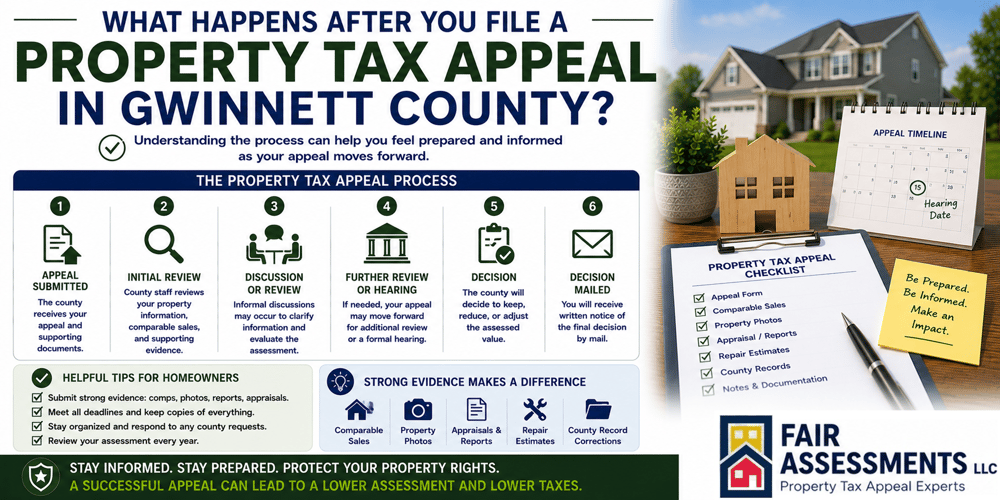
Step 1: The County Receives the Appeal
Once the appeal is submitted, the county begins reviewing the information provided by the homeowner.
This may include:
- Appeal forms
- Comparable sales
- Property photos
- Appraisals
- Repair estimates
- County record corrections
Accurate and organized documentation may help strengthen the review process.
Step 2: Review of Property Information
County officials may review:
- Property characteristics
- Comparable sales
- Market trends
- Assessment history
- Supporting evidence submitted with the appeal
The county may compare the homeowner’s information with its own valuation data.
Step 3: Possible Informal Discussions or Reviews
In some situations, the appeal process may involve informal review or communication regarding the assessment.
This stage may involve:
- Clarifying property information
- Reviewing submitted evidence
- Discussing valuation concerns
- Evaluating possible adjustments
Some appeals may be resolved during this stage.
Step 4: Further Appeal Review or Hearings
If the assessment dispute continues, the appeal may move further through the formal review process.
Depending on the situation, additional review or hearings may occur to evaluate:
- Market value evidence
- Comparable sales
- Property condition
- County valuation methods
The process focuses primarily on property value rather than personal financial hardship.
How Long Does the Process Take?
Property tax appeal timelines can vary.
The length of time may depend on:
- Appeal volume
- Complexity of the case
- Amount of evidence submitted
- Scheduling and review procedures
Some appeals may resolve more quickly than others.
What Evidence Is Most Helpful?
Strong appeal evidence often includes:
- Recent comparable sales
- Property photos
- Appraisals
- Inspection reports
- Repair estimates
- County record corrections
Organized evidence may help support a more accurate valuation argument.
Can the Assessed Value Change?
Depending on the review, the county may:
- Keep the assessment the same
- Reduce the assessed value
- Make adjustments based on evidence
Each case is evaluated individually based on available information and market conditions.
Why Homeowners Should Stay Organized
Throughout the process, homeowners may benefit from:
- Keeping copies of all documents
- Tracking deadlines
- Saving communication records
- Organizing comparable sales and evidence
Good organization may help simplify the appeal process.
Common Mistakes Homeowners Make
Some homeowners weaken their appeals by:
- Missing deadlines
- Providing weak comparable sales
- Failing to verify county records
- Submitting incomplete documentation
- Waiting too long to gather evidence
Preparation often plays an important role in appeal effectiveness.
Why Annual Assessment Reviews Still Matter
Even after an appeal is completed, homeowners should continue reviewing assessment notices each year.
Market conditions and property values can change over time, and annual review may help homeowners:
- Monitor assessment increases
- Identify future issues
- Track neighborhood market trends
- Evaluate future appeal opportunities
Why Professional Guidance May Help
Property tax appeals can sometimes become complicated, especially when:
- Market values shift quickly
- Comparable sales are difficult to analyze
- Property condition issues exist
- County records contain inaccuracies
Professional guidance may help homeowners better understand the process and prepare stronger appeal support.
Final Thoughts
After filing a property tax appeal in Gwinnett County, homeowners typically move through a review process focused on determining whether the assessed value accurately reflects market value.
By staying organized, gathering strong evidence, and understanding the steps involved, homeowners may improve their ability to navigate the appeal process and potentially reduce their property tax burden.