
Filing a property tax appeal in Georgia often starts with one important question:
What documents do I actually need?
Strong supporting documentation can play a major role in helping homeowners challenge an overassessed property value. The more organized and relevant the evidence, the stronger the appeal may be.
This guide explains the most common documents homeowners may want to gather before filing a Georgia property tax appeal.
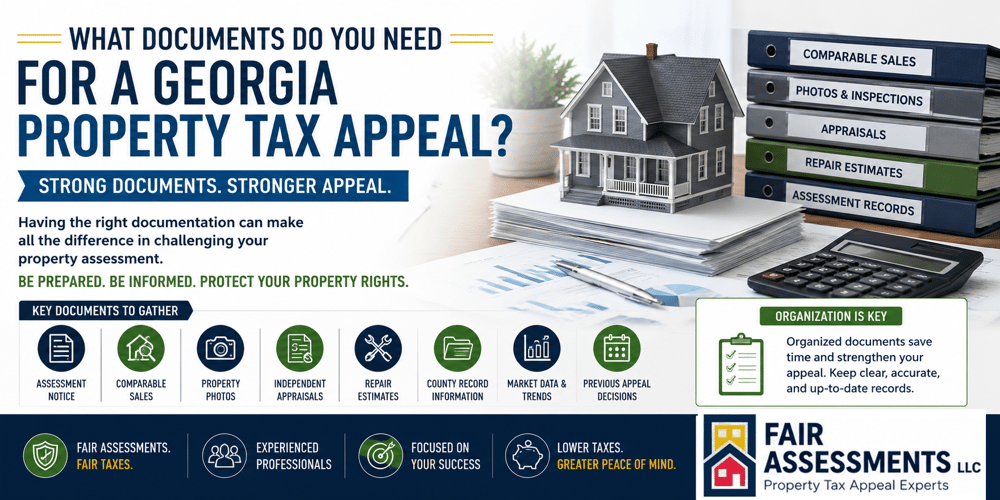
Why Documentation Matters
County assessors base property values on market data, property characteristics, and assessment records. When filing an appeal, homeowners typically need evidence showing why the current assessment may be inaccurate or unfair.
Good documentation can help:
- Support a lower valuation argument
- Identify county record errors
- Demonstrate property condition issues
- Strengthen comparable market analysis
- Improve overall appeal preparation
Property Assessment Notice
One of the first documents homeowners should review is the annual assessment notice received from the county.
This notice usually includes:
- Fair market value
- Assessed value
- Previous year values
- Appeal deadlines
- Property information
Carefully reviewing the notice can help identify possible inaccuracies or unexpected changes.
Comparable Property Sales
Comparable sales are often one of the strongest forms of evidence in a property tax appeal.
Helpful comparables are typically:
- Recently sold homes
- Located nearby
- Similar in size and style
- Similar in age and condition
Comparable sales may help demonstrate that the assessed value is higher than current market conditions support.
Property Photos
Photos can help document:
- Structural issues
- Deferred maintenance
- Damage
- Outdated interiors
- Exterior problems
Visual evidence may help explain why a property may not justify the county’s valuation.
Independent Appraisals
A professional appraisal may provide additional support for a property tax appeal.
Appraisals can help establish:
- Estimated fair market value
- Property condition considerations
- Market-based valuation analysis
Although not always required, appraisals may strengthen certain cases.
Repair Estimates and Contractor Reports
If the property has significant repair needs, homeowners may want to gather:
- Contractor estimates
- Inspection reports
- Engineering reports
- Repair invoices
These documents may help show why the property’s value could be lower than assessed.
County Property Record Information
Homeowners should review county records carefully for possible errors involving:
- Square footage
- Bedroom or bathroom counts
- Lot size
- Building features
- Improvements
Incorrect county data can sometimes lead to inaccurate assessments.
Previous Appeal Decisions
If the property was appealed previously, earlier decisions and supporting materials may still be useful.
These documents may help track:
- Historical assessments
- Prior reductions
- Comparable value trends
- Assessment consistency
Market Data and Neighborhood Information
Additional helpful evidence may include:
- Local market trends
- Neighborhood sales activity
- Real estate market reports
- Economic conditions affecting value
This information may help support broader market-based arguments.
Organizing Your Appeal Materials
Keeping documents organized can help simplify the appeal process.
Homeowners may benefit from:
- Creating labeled folders
- Organizing evidence by category
- Keeping digital copies
- Tracking deadlines carefully
Clear organization may help present a more professional and effective appeal.
Common Mistakes to Avoid
Some homeowners weaken their appeal by:
- Submitting unrelated documents
- Using outdated comparable sales
- Missing deadlines
- Providing incomplete evidence
- Ignoring county record errors
Strong, relevant, and well-organized evidence is usually more effective than simply submitting large amounts of paperwork.
Why Professional Guidance May Help
Property tax appeals often involve:
- Market analysis
- Valuation comparisons
- Evidence preparation
- Filing requirements
- County procedures
Professional guidance may help homeowners better understand what documentation may be most useful for their specific situation.
Final Thoughts
Preparing the right documents is an important part of building a strong Georgia property tax appeal.
By gathering accurate evidence, reviewing county records carefully, and staying organized throughout the process, homeowners may improve their chances of achieving a fairer property assessment and potentially lowering their property taxes.