
Property tax assessments can be confusing for many homeowners in Gwinnett County, especially when property values increase unexpectedly.
Understanding how Gwinnett County property tax assessments work may help homeowners better review their notices, identify possible overvaluations, and determine whether a property tax appeal may be appropriate.
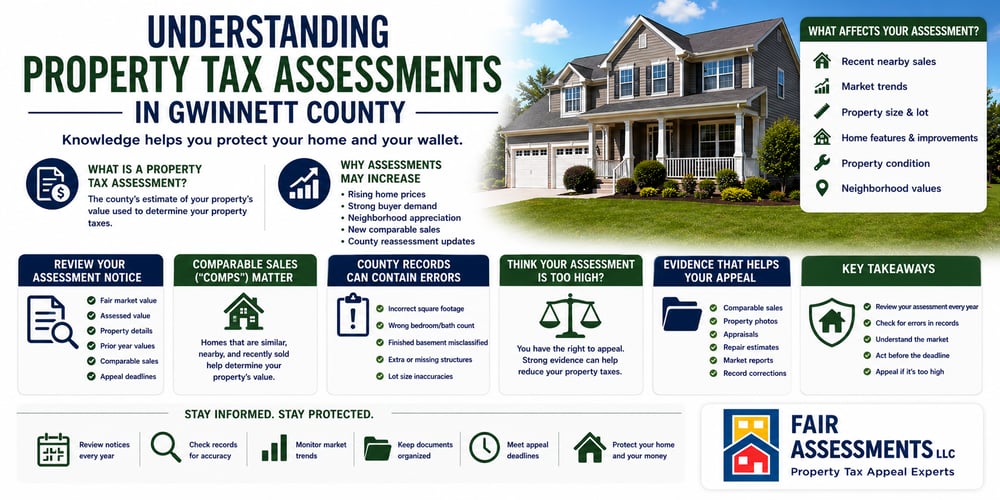
What Is a Property Tax Assessment?
A property tax assessment is the county’s estimate of a property’s value for taxation purposes.
This assessment helps determine:
- Assessed value
- Taxable value
- Annual property tax obligations
The county uses various market and property data to estimate value each year.
How Gwinnett County Estimates Property Value
Gwinnett County assessors generally consider factors such as:
- Recent nearby home sales
- Property size
- Lot characteristics
- Neighborhood trends
- Property condition
- Home features and improvements
The goal is to estimate fair market value based on current market conditions.
Why Assessments May Increase
Homeowners may notice higher property values due to:
- Rising home prices
- Strong buyer demand
- Neighborhood appreciation
- New comparable sales
- County reassessment updates
Even homeowners who have not renovated their homes may still experience assessment increases if surrounding market values rise.
Why Homeowners Should Review Assessment Notices Carefully
Many homeowners assume county assessments are automatically accurate, but notices should still be reviewed carefully each year.
Potential issues may include:
- Incorrect square footage
- Inaccurate property features
- Overstated improvements
- Inaccurate comparable sales
- Market values that appear too high
Small errors may lead to higher property taxes over time.
Important Information to Review
When reviewing a Gwinnett County assessment notice, homeowners may want to check:
- Fair market value
- Assessed value
- Property details
- Prior year values
- Comparable neighborhood sales
- Appeal deadlines
Carefully reviewing these details may help homeowners identify potential assessment concerns early.
How Comparable Sales Affect Assessments
Comparable sales, often called “comps,” are commonly used to estimate property value.
Strong comparable properties are usually:
- Recently sold
- Located nearby
- Similar in size and condition
- Similar in style and features
If nearby comparable homes sold for less than the county’s valuation, additional review may be appropriate.
Can County Records Contain Errors?
Yes.
County property records may sometimes contain inaccuracies involving:
- Lot size
- Bedroom or bathroom count
- Finished basements
- Garages
- Additional structures
- Square footage
Incorrect records may potentially inflate assessed value.
What If the Assessment Seems Too High?
If homeowners believe the county overestimated their property’s value, they may have the right to file a property tax appeal.
Evidence that may support an appeal includes:
- Comparable sales
- Property photos
- Appraisals
- Repair estimates
- Market reports
- County record corrections
A successful appeal may potentially reduce property taxes.
Why Deadlines Matter
Property tax appeal deadlines are important.
Missing the filing deadline may limit the ability to challenge the assessment for that year.
Homeowners should:
- Open notices promptly
- Review assessments carefully
- Begin gathering evidence early if needed
Why Long-Term Monitoring Is Important
Even if an assessment seems reasonable one year, future assessments may still change significantly.
Annual review may help homeowners:
- Track assessment trends
- Identify sudden increases
- Catch record errors early
- Evaluate future appeal opportunities
Consistent monitoring may help homeowners reduce the risk of long-term overassessment.
Why Professional Guidance May Help
Property assessments and valuation analysis can sometimes be complicated.
Professional guidance may help homeowners:
- Analyze comparable sales
- Review assessment accuracy
- Identify record discrepancies
- Prepare stronger appeal evidence
This may improve the ability to challenge inaccurate assessments effectively.
Final Thoughts
Understanding how Gwinnett County property tax assessments work can help homeowners better protect themselves from overassessment and unnecessary property tax increases.
By reviewing notices carefully, checking county records, monitoring market conditions, and responding quickly to potential valuation concerns, homeowners may improve their ability to maintain fair and accurate property assessments.