
Market trends play a major role in Gwinnett County property assessments because changing real estate conditions may directly affect how properties are valued for tax purposes.
Many homeowners are surprised when their property assessment increases even though they have not renovated or improved their home. In many cases, broader market activity and neighborhood sales trends may influence the county’s estimated fair market value.
Understanding how market trends affect property assessments may help homeowners better review assessment notices and determine whether a property tax appeal may be appropriate.
What Are Market Trends?
Market trends refer to patterns and changes within the real estate market over time.
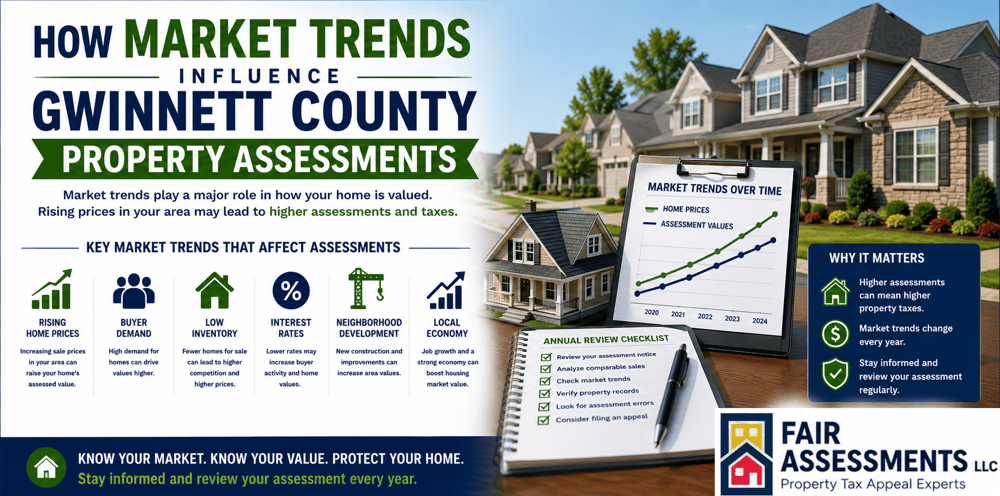
These trends may include:
- Rising or declining home prices
- Buyer demand
- Housing inventory levels
- Interest rates
- Neighborhood development
- Local economic conditions
Market trends help shape what buyers may realistically pay for homes in a specific area.
Why Market Trends Affect Property Assessments
Property tax assessments are generally based on estimated fair market value.
If nearby home prices rise significantly, the county may also estimate that surrounding properties have increased in value.
As market conditions change, assessments may also increase or decrease accordingly.
How Gwinnett County Uses Market Data
Gwinnett County assessors commonly review:
- Comparable sales
- Neighborhood market activity
- Local housing demand
- Property characteristics
- Broader real estate trends
These factors help support estimated property values used during the assessment process.
Why Rising Markets May Increase Assessments
During periods of strong buyer demand and rising home prices, nearby comparable sales may increase rapidly.
This may result in:
- Higher assessed values
- Increased property taxes
- Larger escrow payments
Even homeowners who have not updated their homes may still experience assessment increases if surrounding property values rise.
Why Declining Markets Matter Too
Market trends do not always move upward.
If housing demand slows or nearby sale prices decline, homeowners may question whether their assessment still accurately reflects current market conditions.
Reviewing local market activity regularly may help identify possible overvaluation concerns.
How Comparable Sales Reflect Market Trends
Comparable sales, often called “comps,” are one of the most important indicators of local market conditions.
Strong comparable properties are usually:
- Recently sold
- Located nearby
- Similar in size and style
- Similar in condition
- Similar in age and features
These sales may help demonstrate whether the county’s estimated value appears reasonable.
Why Property Condition Still Matters
Even during strong markets, property condition may still affect fair market value.
Homes with issues such as:
- Roof damage
- Structural concerns
- Deferred maintenance
- Outdated interiors
- Water damage
may not realistically sell for the same amount as fully renovated neighboring properties.
Condition differences may significantly affect property value comparisons.
Can County Records Affect Assessments?
Yes.
County property records are often used during the assessment process.
If records incorrectly describe a property’s:
- Square footage
- Bedrooms or bathrooms
- Finished basements
- Additions or improvements
the county may compare the property to homes that are more valuable than appropriate.
Reviewing county records carefully may help homeowners identify possible inaccuracies.
Why Annual Assessment Reviews Matter
Housing markets may shift quickly from year to year.
Annual review may help homeowners:
- Monitor assessment increases
- Track neighborhood market activity
- Review comparable sales
- Catch county record errors
- Evaluate possible appeal opportunities
Regular monitoring may help reduce long-term overassessment risks.
What If the Assessment Seems Too High?
If homeowners believe market trends were applied inaccurately or the assessment appears too high, they may have the right to file a property tax appeal.
Supporting evidence may include:
- Comparable sales
- Property photos
- Appraisals
- Inspection reports
- Repair estimates
- County record corrections
Strong evidence may help support a more accurate valuation argument.
Why Professional Guidance May Help
Market trend analysis and property valuation review can sometimes become complicated.
Professional guidance may help homeowners:
- Analyze comparable sales
- Review assessment accuracy
- Identify county record discrepancies
- Prepare stronger appeal evidence
This may improve the effectiveness of a property tax appeal.
Final Thoughts
Market trends can significantly influence Gwinnett County property assessments because changing real estate conditions directly affect estimated fair market value.
By reviewing market activity carefully, monitoring assessments annually, and verifying county property records, homeowners may improve their ability to identify inaccurate valuations and potentially reduce unnecessary property tax costs.