
Many homeowners in DeKalb County review their annual property tax assessments and wonder how the county determines a property’s fair market value.
Understanding how fair market value is calculated may help homeowners better evaluate their assessment notices, identify possible inaccuracies, and determine whether a property tax appeal may be appropriate.
What Is Fair Market Value?
Fair market value generally refers to the estimated price a property would likely sell for under normal market conditions.
In property tax assessments, counties attempt to estimate what a willing buyer would reasonably pay a willing seller for the property in the current market.
Fair market value serves as the foundation for calculating property taxes.
Why Fair Market Value Matters
The county’s estimate of fair market value directly affects:
- Assessed value
- Taxable value
- Annual property tax obligations
If the estimated fair market value is too high, homeowners may end up paying higher property taxes than necessary.
How DeKalb County Estimates Fair Market Value
DeKalb County assessors generally review multiple factors when estimating property value.
These may include:
- Recent comparable sales
- Neighborhood market trends
- Property size
- Lot characteristics
- Property condition
- Home features and upgrades
- Market appreciation trends
The goal is to estimate what the property would likely sell for under current market conditions.
How Comparable Sales Influence Value
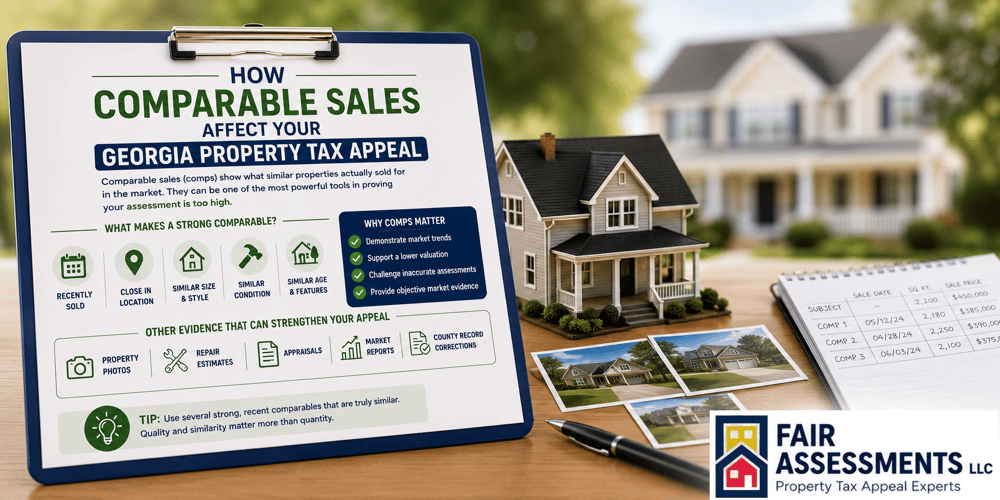
Comparable sales, often called “comps,” are one of the most important factors in many assessments.
Assessors may review nearby properties that recently sold and compare them based on:
- Size
- Age
- Condition
- Features
- Location
- Style
If comparable homes sold for lower amounts, homeowners may question whether the assessment accurately reflects market value.
Why Property Condition Matters
Property condition can significantly affect fair market value.
Homes with issues such as:
- Roof damage
- Structural concerns
- Water damage
- Deferred maintenance
- Outdated interiors
may not sell for the same price as nearby renovated properties.
If condition problems are not fully reflected in county records, the assessment may potentially overstate value.
Why Market Conditions Affect Assessments
Local housing markets can change quickly.
Property values may rise or fall based on:
- Buyer demand
- Interest rates
- Neighborhood development
- Housing inventory
- Economic conditions
Rapid market appreciation may sometimes lead to significant assessment increases.
Can County Records Affect Fair Market Value?
Yes.
County property records are often used during the assessment process.
If records contain inaccuracies involving:
- Square footage
- Bedrooms or bathrooms
- Finished basements
- Additions or improvements
- Lot size
the estimated value may also become inaccurate.
Why Homeowners Should Review Assessment Notices Carefully
Assessment notices should be reviewed thoroughly each year.
Homeowners may want to compare:
- County property records
- Comparable neighborhood sales
- Prior year assessments
- Property condition
- Market trends
Careful review may help identify possible overvaluation concerns early.
What Happens If You Disagree With the Value?
If homeowners believe the estimated fair market value is too high, they may have the right to file a property tax appeal.
Supporting evidence may include:
- Comparable sales
- Appraisals
- Property photos
- Repair estimates
- Inspection reports
- County record corrections
A successful appeal may potentially reduce property taxes.
Why Annual Monitoring Is Important
Even if an assessment appears reasonable one year, future assessments may still change significantly.
Annual review may help homeowners:
- Track assessment trends
- Catch county record errors
- Monitor neighborhood market changes
- Identify future appeal opportunities
Long-term monitoring may help reduce overassessment risks.
Why Professional Guidance May Help
Property valuation analysis can sometimes become complicated.
Professional guidance may help homeowners:
- Analyze comparable sales
- Review assessment accuracy
- Identify record discrepancies
- Prepare stronger appeal evidence
This may improve the ability to challenge inaccurate assessments effectively.
Final Thoughts
Fair market value plays a central role in DeKalb County property tax assessments because it directly affects the amount homeowners may pay in property taxes each year.
By understanding how the county estimates property value, reviewing assessments carefully, and monitoring market conditions closely, homeowners may improve their ability to identify inaccurate valuations and potentially reduce unnecessary property tax costs.