
Many homeowners in Georgia assume their property tax assessment is based on completely accurate information. However, county property records can sometimes contain errors that may lead to inflated property valuations and higher property taxes.
Even small inaccuracies in county records may affect how a property is assessed. Understanding these errors can help homeowners identify potential overassessments and determine whether a property tax appeal may be appropriate.
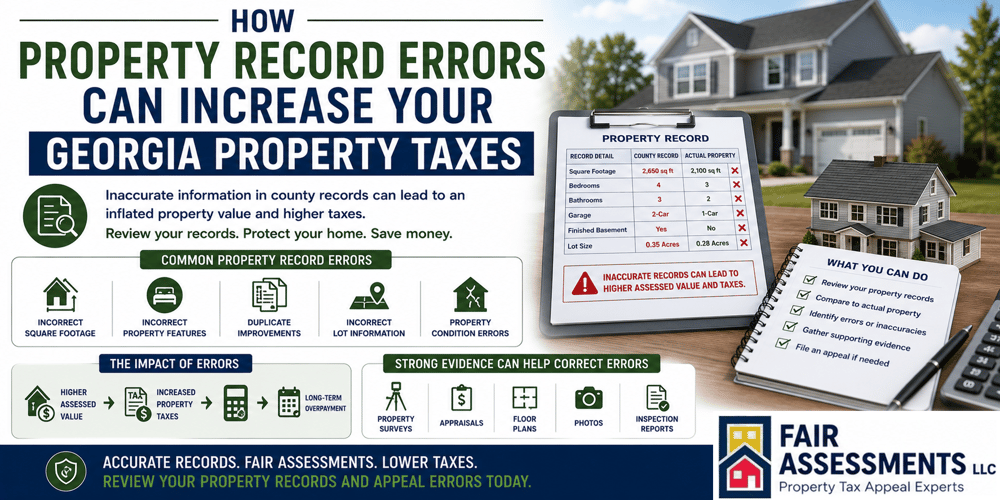
What Are Georgia Property Record Errors?
County tax assessors maintain property records that include important details about each property.
These records may contain information such as:
- Square footage
- Lot size
- Number of bedrooms and bathrooms
- Property features
- Improvements
- Building type
- Construction details
If this information is inaccurate, the assessed value may also be incorrect.
Common Georgia Property Record Errors
Several types of errors may affect a property assessment.
Incorrect Square Footage
One of the most common issues involves overstated living area or building size.
If county records show more square footage than the property actually has, the assessed value may increase unnecessarily.
Incorrect Property Features
Records may incorrectly list:
- Extra bathrooms
- Additional bedrooms
- Finished basements
- Garages
- Pools
- Outbuildings
Features that do not exist may increase estimated market value.
Duplicate Improvements
In some situations, improvements may accidentally be counted more than once in county records.
Incorrect Lot Information
Lot size or land characteristics may also affect property value calculations.
Property Condition Errors
County records may fail to reflect:
- Deferred maintenance
- Damage
- Structural issues
- Outdated interiors
A property in poor condition may not justify the same value as a fully updated home.
How Property Record Errors Affect Georgia Property Taxes
Property tax assessments are closely tied to estimated market value.
If county records overstate property characteristics, the county may estimate the property is worth more than it actually is.
This may result in:
- Higher assessed values
- Increased property taxes
- Larger escrow payments
- Long-term overpayment
How Georgi Homeowners Can Check Their Records
Homeowners may want to review county property records annually to verify accuracy.
Important details to review may include:
- Property dimensions
- Finished living area
- Number of rooms
- Lot size
- Building features
- Recent improvements
Comparing county records to the actual property can help identify discrepancies.
What Evidence May Help Correct Errors?
If errors are discovered, homeowners may gather supporting documentation such as:
- Property surveys
- Appraisals
- Floor plans
- Contractor reports
- Inspection reports
- Photos
- Measurement records
Strong evidence may help support correction requests or appeals.
Can Georgia Property Record Errors Be Appealed?
Yes. In many situations, homeowners may challenge inaccurate assessments caused by county record errors through the property tax appeal process.
Correcting inaccurate data may potentially lower the assessed value and reduce property taxes.
Why Small Errors Can Matter
Even relatively minor inaccuracies can affect assessments over time.
For example:
- An overstated square footage amount
- Incorrect finished basement information
- Extra listed features
may continue influencing property taxes year after year if not corrected.
Why Reviewing Georgia Property Tax Notices Every Year Is Important
Property records and assessments should not be ignored simply because taxes were reasonable in previous years.
Annual review may help homeowners:
- Catch new errors
- Identify value increases
- Monitor county updates
- Prevent long-term overassessment
Early review may make corrections easier.
Why Professional Guidance May Help With Georgia Property Tax Appeals
Property assessments and county records can sometimes be complicated to analyze.
Professional guidance may help homeowners:
- Identify record discrepancies
- Review assessment accuracy
- Gather supporting evidence
- Navigate the appeal process
This may improve the chances of correcting inflated property values.
Concerned About Your Property Tax Assessment?
If you believe inaccurate county property records may be affecting your property's assessed value, consider reviewing property records, comparable sales, and supporting documentation before appeal deadlines pass.
Contact Fair Assessments to learn more about your appeal options.
Final Thoughts
Property record errors can sometimes lead to higher Georgia property tax assessments and higher property taxes without homeowners even realizing it.
By reviewing county records carefully, identifying inaccuracies early, and responding quickly when errors appear, homeowners may better protect themselves from unfair assessments and unnecessary tax costs.