
When homeowners in Georgia review their property tax assessment notices, two terms often create confusion:
Market value and assessed value.
Although these terms are closely related, they are not the same thing. Understanding the difference can help homeowners better interpret their property tax notices and identify possible overassessments.
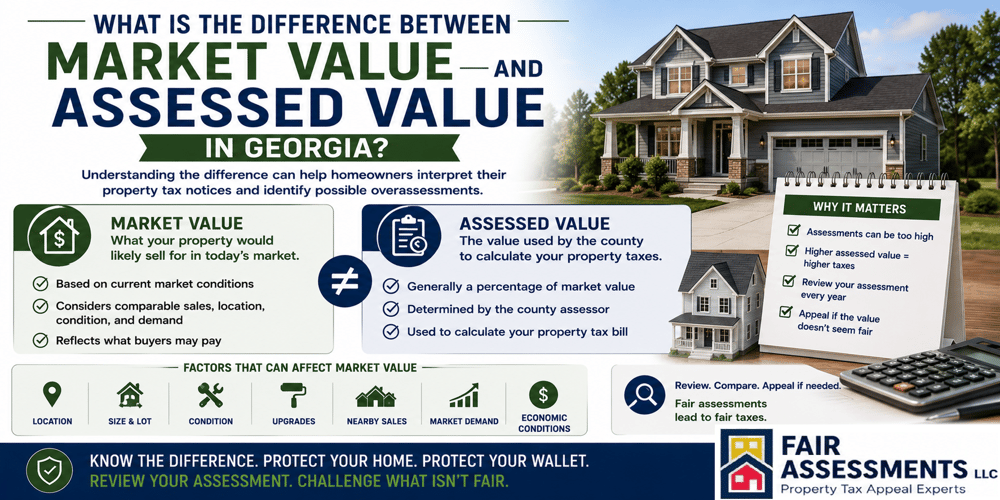
What Is Market Value in Georgia Property Taxes?
Market value, often called fair market value, is the estimated amount a property could reasonably sell for under current market conditions.
County assessors attempt to estimate:
- What buyers may pay for the property
- Current neighborhood market trends
- Comparable recent sales
- Property condition and features
Market value is intended to reflect real estate market activity.
What Factors Affect Market Value in Georgia?
Several factors may influence a property’s market value, including:
- Location
- Home size
- Lot size
- Age and condition
- Renovations or upgrades
- Nearby sales
- Market demand
- Economic conditions
Property values may rise or fall depending on local market activity.
What Is Assessed Value in Georgia?
Assessed value is the taxable value used to calculate property taxes.
In Georgia, assessed value is generally based on a percentage of the county’s estimated fair market value.
This assessed value is what local governments use when calculating property tax obligations.
Why the Difference Between Market Value and Assessed Value Matters
Many homeowners mistakenly assume market value and assessed value are identical.
However:
- Market value estimates what the property may sell for
- Assessed value determines taxation calculations
Understanding this distinction helps homeowners better evaluate whether their assessment appears reasonable.
How Georgia Counties Determine Property Assessments
County assessors typically use:
- Comparable property sales
- Mass appraisal methods
- Market data analysis
- Property characteristics
- Assessment models
These systems attempt to estimate fair market value consistently across many properties.
Can a Georgia Property Assessment Be Incorrect?
Yes.
In some situations, assessed value may be too high due to:
- Inaccurate property records
- Incorrect comparable sales
- Overstated property features
- Failure to account for condition issues
- Market changes not fully reflected
This is one reason homeowners should review assessment notices carefully each year.
Why Two Similar Georgia Homes May Have Different Assessments
Even nearby homes may have different assessed values because of:
- Different property conditions
- Renovations or additions
- Lot differences
- Assessment timing
- Exemptions or tax protections
- County record variations
Not every property is assessed identically.
How Georgia Homeowners Can Review Their Property Assessment
Homeowners may want to compare:
- Recent nearby sales
- Similar home assessments
- County property records
- Property details and condition
Reviewing these factors may help determine whether the assessed value appears fair.
What Happens If You Disagree with Your Georgia Property Assessment?
If homeowners believe the assessment is too high, they may have the right to file a property tax appeal.
Supporting evidence may include:
- Comparable sales
- Appraisals
- Property photos
- Repair estimates
- Market reports
- County record corrections
A successful appeal may reduce the assessed value and lower property taxes.
Why Professional Guidance May Help With Georgia Property Tax Appeals
Understanding property valuation and tax assessments can sometimes be complicated.
Professional guidance may help homeowners:
- Analyze market value accuracy
- Review county assessment methods
- Identify record errors
- Prepare appeal evidence
This may improve the ability to challenge inaccurate assessments effectively.
Concerned About Your Property Tax Assessment?
If you believe your property's assessed value may not accurately reflect its fair market value, consider reviewing comparable sales, county property records, and supporting documentation before appeal deadlines pass.
Contact Fair Assessments to learn more about your appeal options.
Final Thoughts
Market value and assessed value serve different purposes in Georgia property taxation, but both directly affect Georgia property assessments and property tax obligations.
By understanding the difference between these terms and reviewing assessments carefully each year, homeowners may better protect themselves from overassessment and unnecessary property tax increases.