
Filing a property tax appeal in Cobb County may help homeowners challenge an assessment they believe is too high. However, many appeals become less effective because of avoidable mistakes during the preparation and review process.
Understanding common property tax appeal mistakes may help homeowners prepare stronger evidence, stay organized, and improve their ability to challenge inaccurate property valuations.
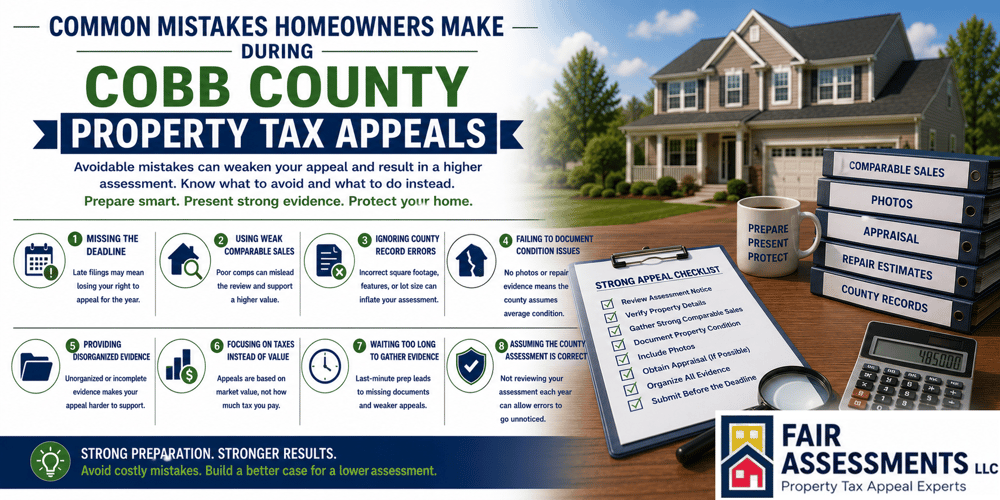
Why Preparation Matters in Property Tax Appeals
Property tax appeals are generally based on market value evidence rather than frustration about taxes.
The goal is usually to demonstrate that the county’s estimated value may not accurately reflect fair market value.
Well-prepared appeals may help homeowners:
- Present stronger evidence
- Identify county record errors
- Support lower valuations
- Improve overall organization
Preparation often plays a major role in appeal effectiveness.
Mistake #1: Missing the Appeal Deadline
One of the most common mistakes is waiting too long to review the assessment notice.
Property tax appeal deadlines are time-sensitive, and missing the filing deadline may limit the ability to challenge the assessment for that year.
Homeowners may benefit from:
- Opening notices promptly
- Reviewing assessments early
- Gathering evidence quickly
- Tracking important deadlines
Mistake #2: Using Weak Comparable Sales
Comparable sales, often called “comps,” are commonly one of the strongest forms of appeal evidence.
Some homeowners weaken their appeals by using:
- Outdated sales
- Homes from different neighborhoods
- Properties with major size differences
- Fully renovated homes that are not comparable
- Homes with significantly different features
Strong comparable sales are usually:
- Recently sold
- Located nearby
- Similar in size and condition
- Similar in age and style
Mistake #3: Ignoring County Record Errors
County property records may sometimes contain inaccuracies involving:
- Square footage
- Bedrooms or bathrooms
- Finished basements
- Garages or additions
- Lot size
Incorrect records may potentially inflate assessed value.
Failing to review county records carefully may cause homeowners to miss important correction opportunities.
Mistake #4: Failing to Document Property Condition Issues
Property condition may significantly affect market value.
Some homeowners fail to provide evidence involving:
- Roof damage
- Water intrusion
- Structural concerns
- Deferred maintenance
- Outdated interiors
- Needed repairs
Without supporting documentation, the county may assume the property is in average or updated condition.
Mistake #5: Providing Disorganized Evidence
Even strong evidence may become less effective if it is poorly organized.
Homeowners may benefit from:
- Clearly labeling documents
- Organizing comparable sales logically
- Including property photos
- Grouping repair estimates together
- Preparing summaries when appropriate
Clear presentation may help simplify the review process.
Mistake #6: Focusing Only on Taxes Instead of Market Value
Property tax appeals are generally based on whether the assessed value accurately reflects fair market value.
Some homeowners weaken appeals by focusing only on:
- Tax frustration
- Financial hardship
- General dissatisfaction with taxes
Strong market-based evidence is usually more persuasive.
Mistake #7: Waiting Too Long to Gather Evidence
Some homeowners begin preparing only days before the deadline.
This may limit the ability to:
- Research comparable sales
- Schedule appraisals
- Obtain repair estimates
- Organize documentation properly
Early preparation may improve the quality of the appeal.
Mistake #8: Assuming the County Assessment Is Automatically Correct
Many homeowners never review assessments because they assume county records are always accurate.
However, annual review may help homeowners:
- Catch record errors
- Monitor assessment increases
- Review neighborhood market trends
- Identify potential overvaluation concerns
Regular monitoring may help reduce long-term overassessment risks.
What Evidence May Strengthen an Appeal?
Useful evidence may include:
- Comparable sales
- Property photos
- Appraisals
- Inspection reports
- Repair estimates
- County record corrections
Strong documentation may help support a more accurate valuation argument.
Why Professional Guidance May Help
Property tax appeal preparation and valuation analysis can sometimes become complicated.
Professional guidance may help homeowners:
- Analyze comparable sales
- Review assessment accuracy
- Identify county record discrepancies
- Organize supporting evidence
- Prepare stronger appeal presentations
This may improve the effectiveness of a property tax appeal.
Final Thoughts
Many common mistakes during Cobb County property tax appeals involve weak preparation, missed deadlines, poor comparable sales, and failure to review county records carefully.
By staying organized, gathering strong market-based evidence, and reviewing assessments thoroughly each year, homeowners may improve their ability to challenge inaccurate property valuations and potentially reduce unnecessary property tax costs.