
Many homeowners in Georgia file property tax appeals hoping to reduce their current tax burden. However, an important question often follows:
Can a successful property tax appeal also help lower future tax bills?
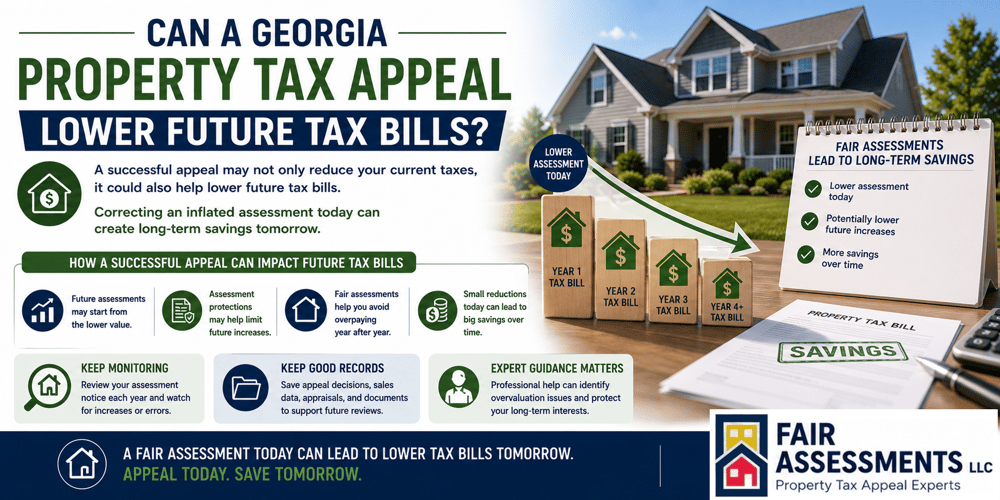
In many situations, the answer may be yes. While every county and property situation is different, a successful appeal can sometimes influence future assessments and potentially create ongoing savings.
Understanding how this process works may help homeowners better evaluate the long-term benefits of appealing their property taxes.
How Property Taxes Are Calculated
Property taxes are generally based on a property’s assessed value.
If a property’s assessed value decreases after an appeal, the amount used to calculate taxes may also decrease, potentially reducing tax obligations.
Because future assessments often build from prior values, a successful reduction may sometimes influence future tax years as well.
What Happens After a Successful Appeal?
If a property tax appeal is successful, the county may:
- Lower the assessed value
- Recalculate the tax bill
- Issue an updated assessment
- Apply refunds or credits in some cases
The exact outcome depends on the county and the details of the appeal decision.
Can Lower Assessments Affect Future Years?
In some situations, a lower assessed value may help moderate future increases because:
- Future assessments may begin from the reduced value
- Some counties apply assessment protections or limitations
- Market changes may be evaluated relative to the adjusted value
However, future reassessments can still occur based on market conditions and county procedures.
Are Future Savings Guaranteed?
No. A successful appeal does not permanently lock in a property value forever.
Future assessments may still increase due to:
- Rising market values
- Neighborhood appreciation
- Renovations or improvements
- New comparable sales
- County reassessment cycles
Still, lowering an inflated value today may reduce the starting point for future calculations.
How Assessment Freezes or Caps May Help
Some Georgia homeowners may qualify for:
- Homestead exemptions
- Assessment freezes
- Tax caps
- Senior protections
When combined with a successful appeal, these protections may further help control future property tax growth.
Availability varies by county and homeowner eligibility.
Why Accurate Assessments Matter Long-Term
Even small annual assessment differences can add up over time.
A property assessed higher than market value may lead to:
- Repeated overpayment of taxes
- Higher escrow costs
- Increased monthly mortgage payments
- Long-term financial strain
Correcting an inaccurate assessment early may help reduce cumulative costs over multiple years.
Why Homeowners Should Continue Monitoring Assessments
Even after a successful appeal, homeowners should continue reviewing annual assessment notices carefully.
Future notices should be checked for:
- Sudden value increases
- County record errors
- Market inconsistencies
- Incorrect property details
Regular monitoring may help homeowners respond quickly if future assessments become unreasonable.
Evidence That May Support Future Appeals
Homeowners may benefit from maintaining records such as:
- Previous appeal decisions
- Comparable sales
- Property photos
- Appraisals
- Repair documentation
- County correspondence
Well-organized records may make future reviews or appeals easier.
Why Professional Guidance May Help
Property tax assessments and future valuation trends can be complicated.
Professional guidance may help homeowners:
- Understand long-term tax implications
- Review assessment trends
- Identify overvaluation concerns
- Prepare stronger appeal evidence
This may help homeowners better protect their financial interests over time.
Final Thoughts
A successful Georgia property tax appeal may not only lower current taxes but could also potentially influence future tax bills depending on the property, county, and market conditions.
While future reassessments can still occur, correcting an inflated value today may help homeowners establish a fairer foundation for future property tax calculations.