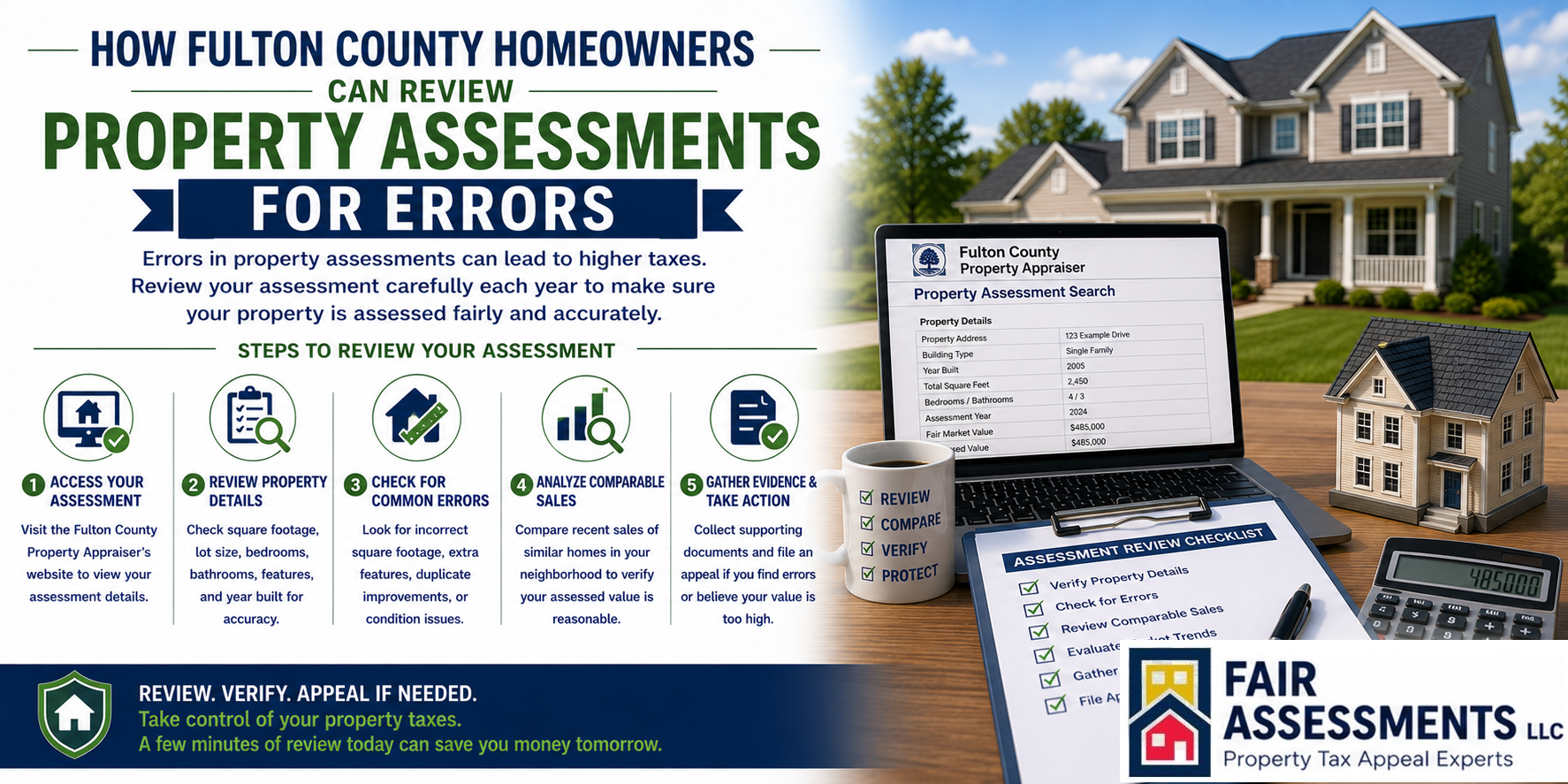
Many homeowners in Fulton County assume their property tax assessment is automatically accurate. However, county assessments may sometimes contain errors that can potentially lead to inflated property values and higher property taxes.

Many homeowners in Fulton County assume their property tax assessment is automatically accurate. However, county assessments may sometimes contain errors that can potentially lead to inflated property values and higher property taxes.
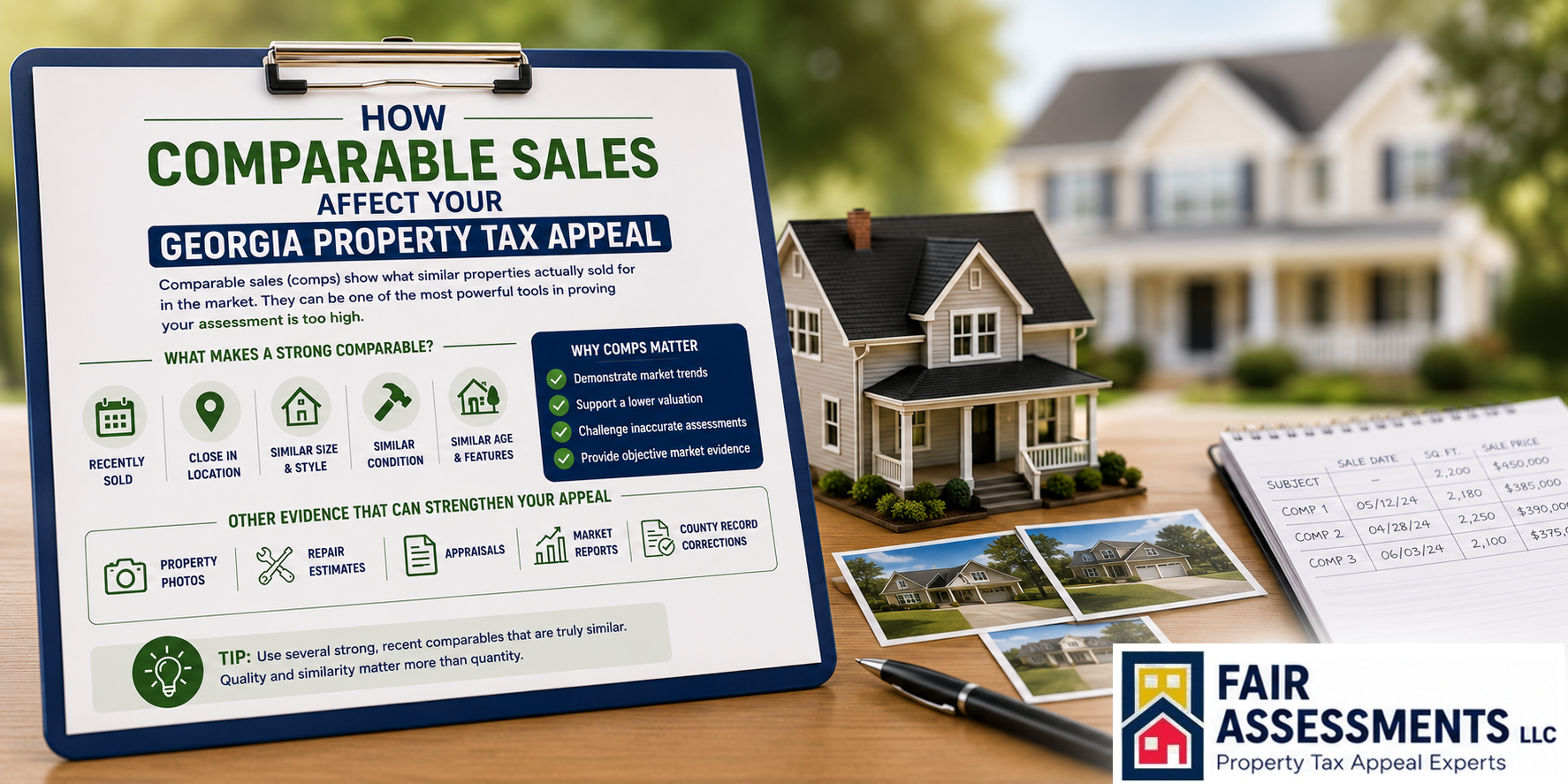
Many homeowners in DeKalb County review their annual property tax assessments and wonder how the county determines a property’s fair market value.
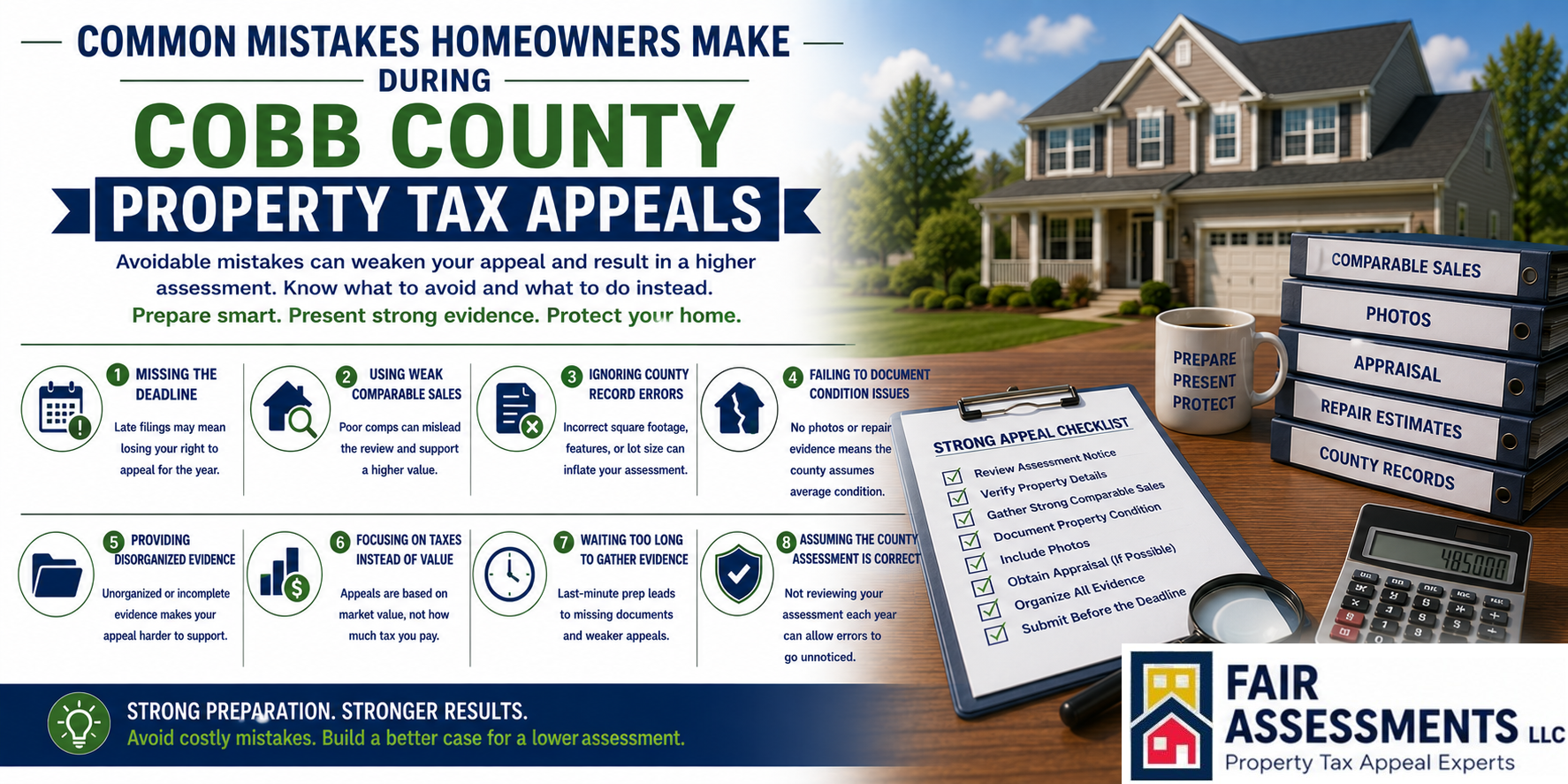
Filing a property tax appeal in Cobb County may help homeowners challenge an assessment they believe is too high. However, many appeals become less effective because of avoidable mistakes during the preparation and review process.
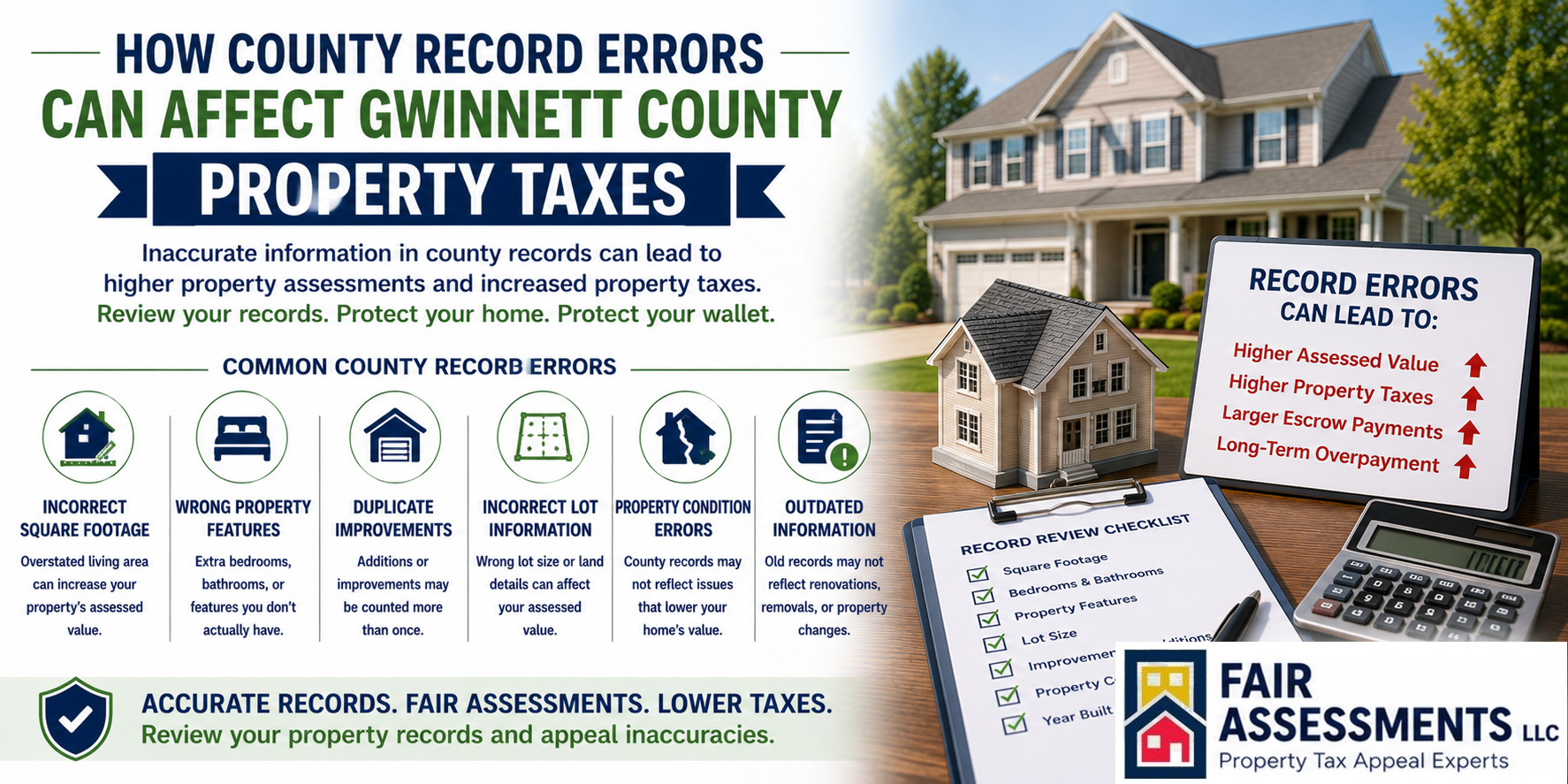
Many homeowners in Gwinnett County assume their property tax assessment is based on completely accurate information. However, county property records can sometimes contain errors that may lead to inflated property valuations and higher property taxes.
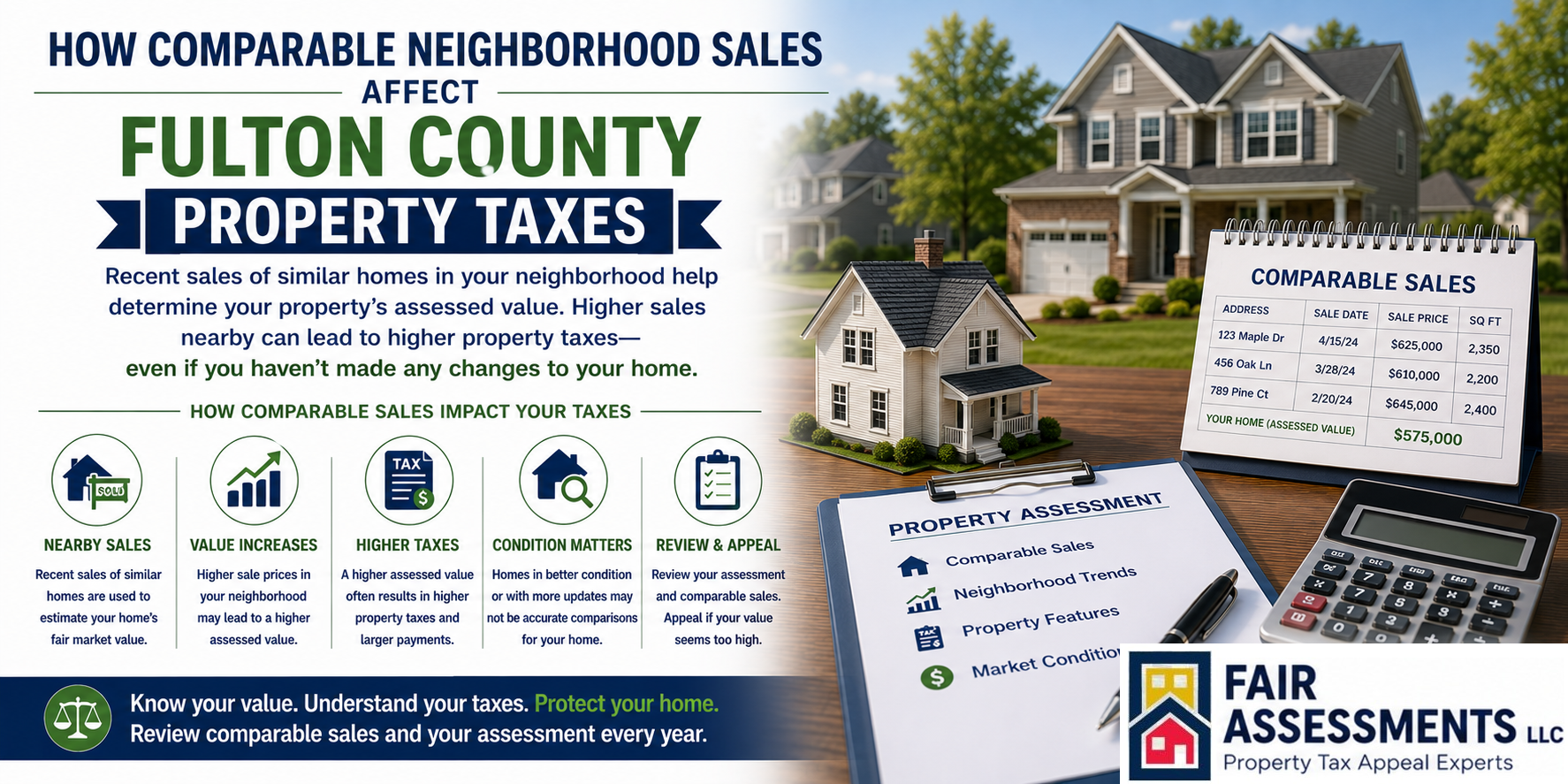
Comparable neighborhood sales play a major role in determining property values and property taxes in Fulton County. Many homeowners are surprised to learn that nearby home sales may affect their property assessment even if they have not renovated or improved their own property.
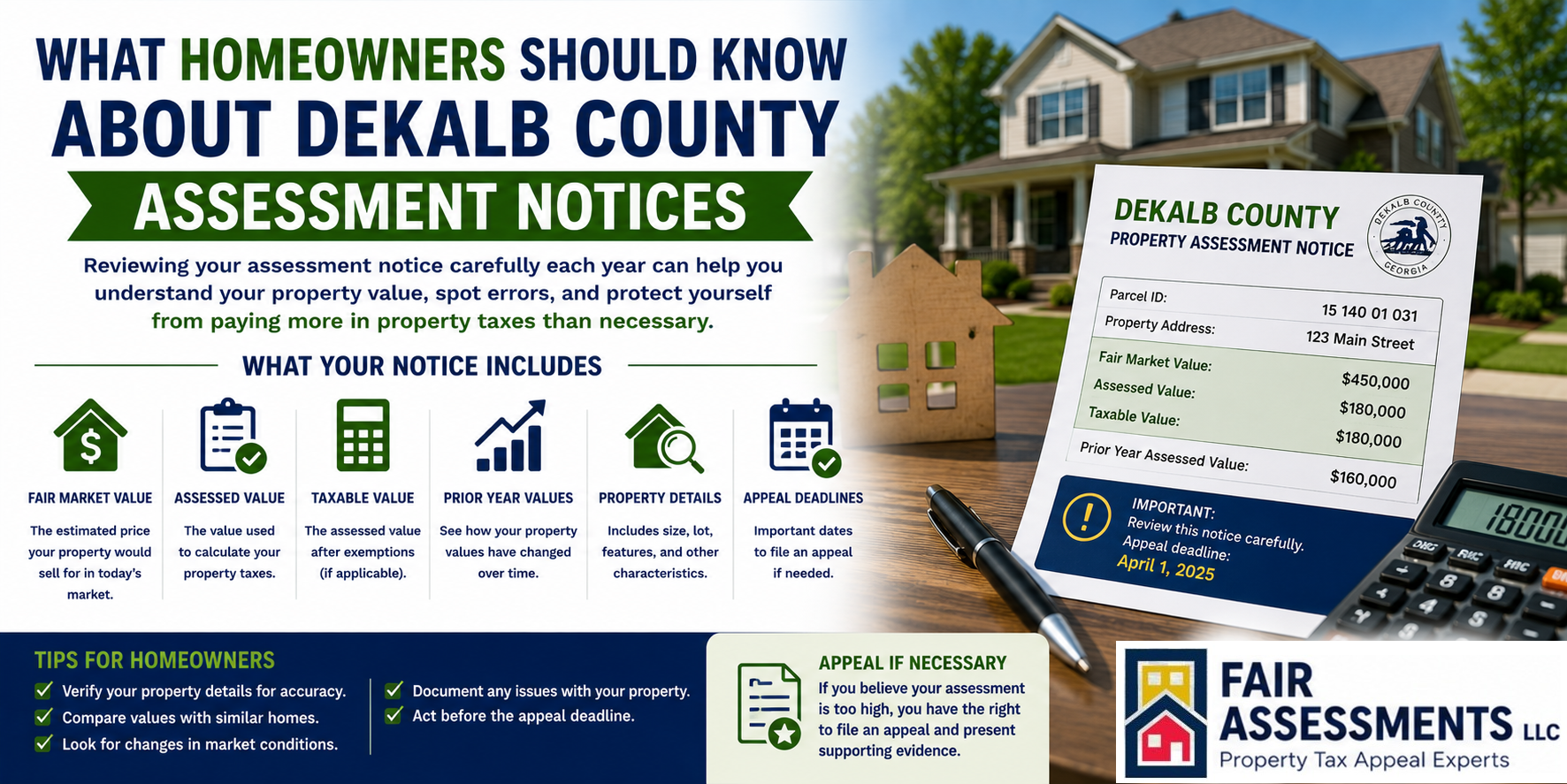
Property assessment notices are an important part of the property tax process in DeKalb County. However, many homeowners are unsure how to read these notices or understand what the information actually means.
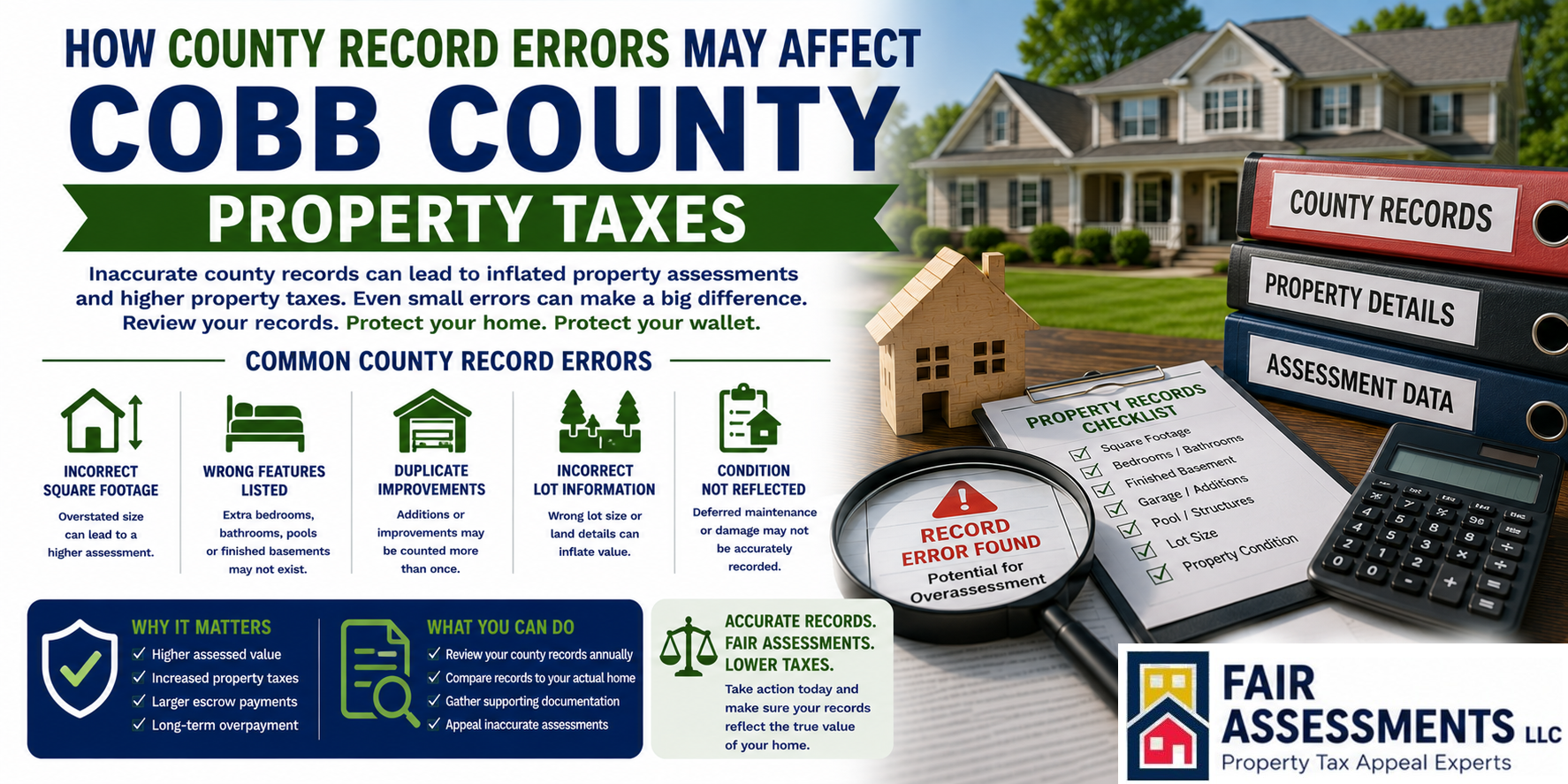
Many homeowners in Cobb County assume the information used to calculate their property taxes is completely accurate. However, county property records may sometimes contain errors that can potentially lead to inflated property assessments and higher property taxes.
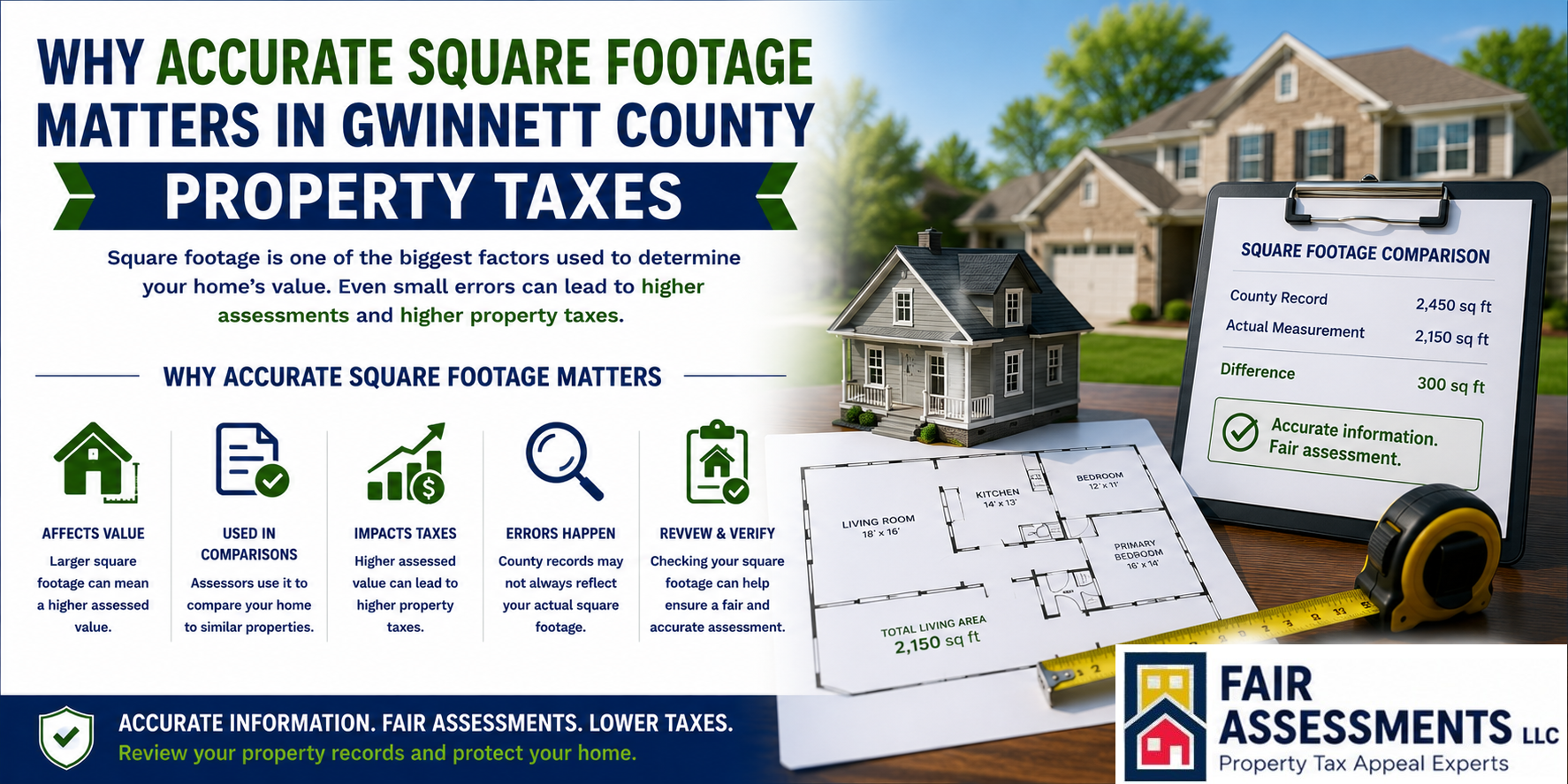
Square footage is one of the most important factors used in Gwinnett County property tax assessments. Because property size often has a major impact on estimated market value, inaccurate square footage in county records may potentially lead to higher property taxes.
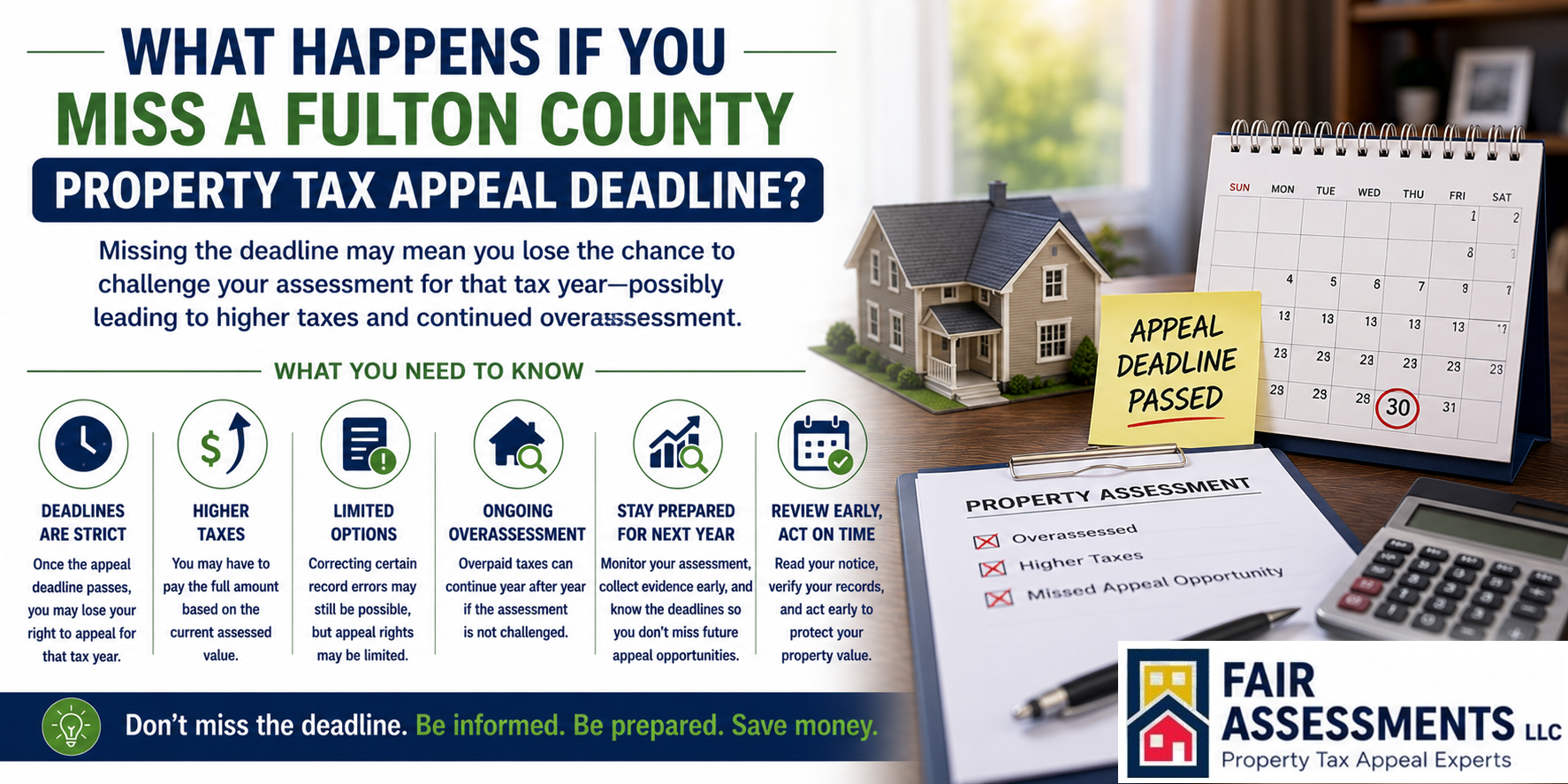
Property tax appeal deadlines are extremely important for homeowners in Fulton County. Missing a filing deadline may limit the ability to challenge an assessment, even if the property appears overvalued.
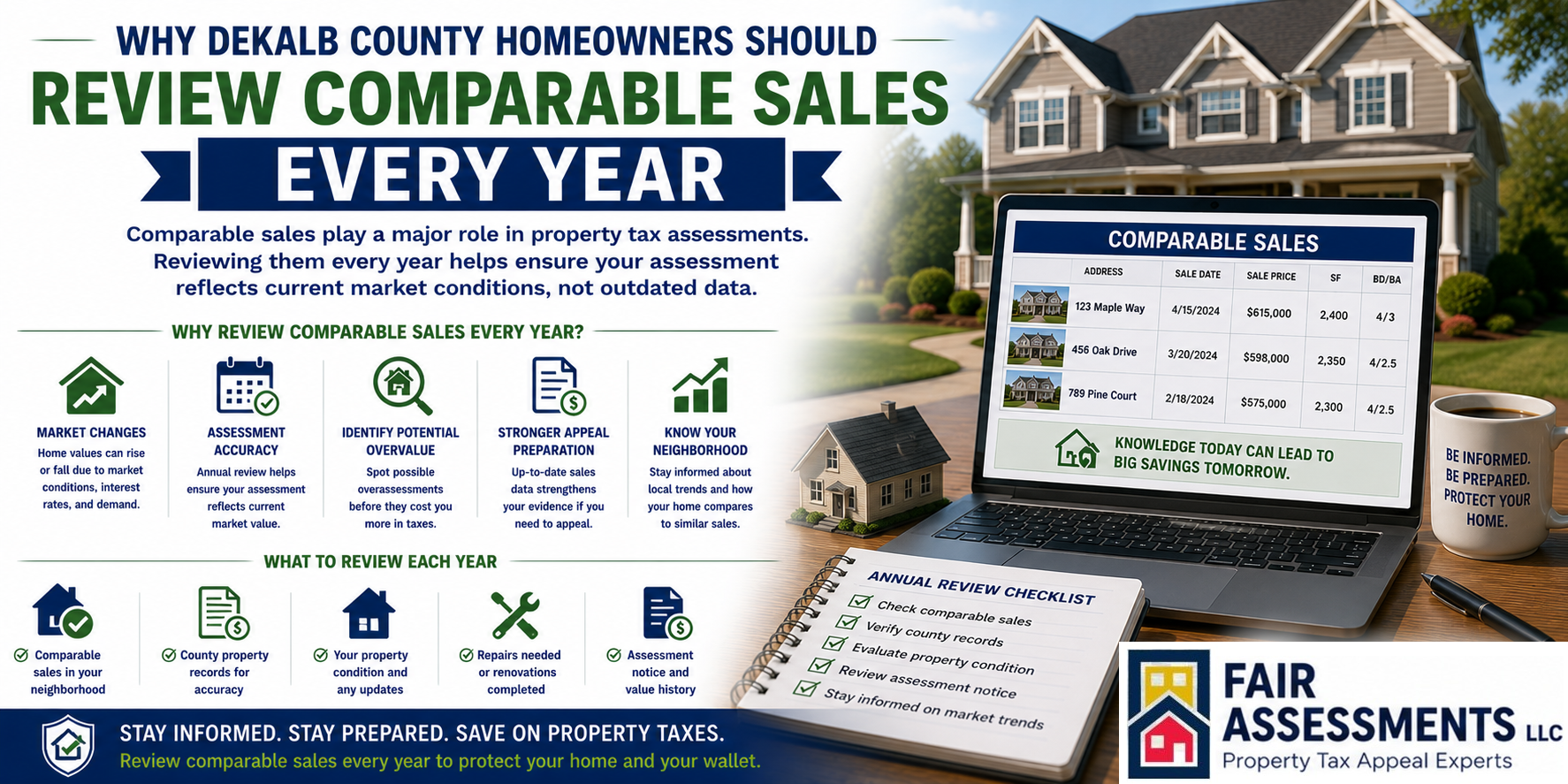
Comparable sales play a major role in DeKalb County property tax assessments because they help estimate a property’s fair market value. However, housing markets and neighborhood conditions can change quickly, which is why homeowners may benefit from reviewing comparable sales every year.



 Phone: (404) 618-0355
© 2026 Fair Assessments, LLC. All Rights Reserved.