Today we are looking at the trend in office values in the Atlanta metro area. Based on information from LoopNet sale price per square foot has been on an uptrend for approximately six months. The median sale price at the start of this year was approximately $70/SF.

The office building list prices show that asking prices are much higher than sale prices and the trend in asking price is down. The asking price at the beginning of this year is near $100/SF and the median sale price from this same time is nearly 30% lower.

CoStar shows a roller coaster ride of sale prices over the past five years. A value of approximately $120 per foot is a midpoint for this range including the including the up and down of the past year.

CoStar office building list prices show the average list price per foot has been declining for approximately three years. The average list price at the beginning of this year was approximately $95/SF. This is much lower than the midpoint of the sale price per square foot range and is closer to the bottom of the sale price per foot range seen above.

For this office building data the LoopNet and CoStar list prices are similar but the sale price data diverges. The LoopNet average list price of approximately $100/SF in January is close to the estimated CoStar average list price of $95/SF. LoopNet's average metro Atlanta sale price was at $70/SF in January and CoStar's was $80/SF although it turned on a dime and headed over $150/SF in the first quarter of this year. It appears that the gyrations in the SP/SF of the CoStar data set may be because there are few sales, perhaps only one per quarter, but that is not the case. There are many sales per quarter in this data set.
A quick look at cap rates shows Realty Rates has an average cap rate for central business district office properties at 10.36% and suburban office at 9.46%. Medical office has an average cap rate of 9.1%. Real Estate Research Corporation shows an Atlanta central business district cap rate of 8.6% and a suburban cap rate of 9.3%. The suburban office cap rates from these two publications are similar, but they diverge on central business district office. Realty Rates takes a national view where RERC gets more localized. However, the RERC cap rates are for newer properties in the best locations, where Realty Rates is a blended rate of the best and the not-so-good.
There is still time to appeal your office building assessment in metro Atlanta. Today is the last day to file a property tax appeal in Gwinnett County. There is still time to appeal your taxable value in Cobb County, Hall County, Clayton County, DeKalb County, and Fulton County.
The Georgia tax assessors are sending out 2013 tax assessment notices and it is time to take a look at Atlanta commercial real estate values. Below is the sale price per square foot trend for retail real estate in metro Atlanta. It appears we are still bouncing along the bottom:

Below is the retail trend in list price. It doesn't matter if you look at the city, county, metro, or state, the asking price trend was pointed downward at the start of this year.

The average sale price per foot is almost 30% lower than the lowest asking price (state-wide) number. Based on this the asking prices are pointed in the right direction - down. But wait. There is another real estate data provider that has this information also. They are considered the better half of the marraige of LoopNet and CoStar. Here is the CoStar average sale price per foot of retail building in the Atlanta metro area:

As you can see this data set shows an average sale price per foot of approximately $130 heading into this year. That is much higher than the LoopNet data. Below is the CoStar information for retail listings:

As you can see here asking price and sale price are very similar with sale price actually slightly higher. Which information do you use? For a property tax appeal you want to use the LoopNet data because it supports a lower value. Most Georgia tax assessors know that the data in LoopNet is user generated. That means that agents and brokers input the information. CoStar has an army of employees that verify sales data and contact property owners on rental and vacancy rates on a regular basis.
Unfortunately for most, CoStar is about three times more expensive than LoopNet. It remains to be seen what will happen to the costs of these services now that one has bought the other. If I find any other good data sources I'll be certain to list them here.

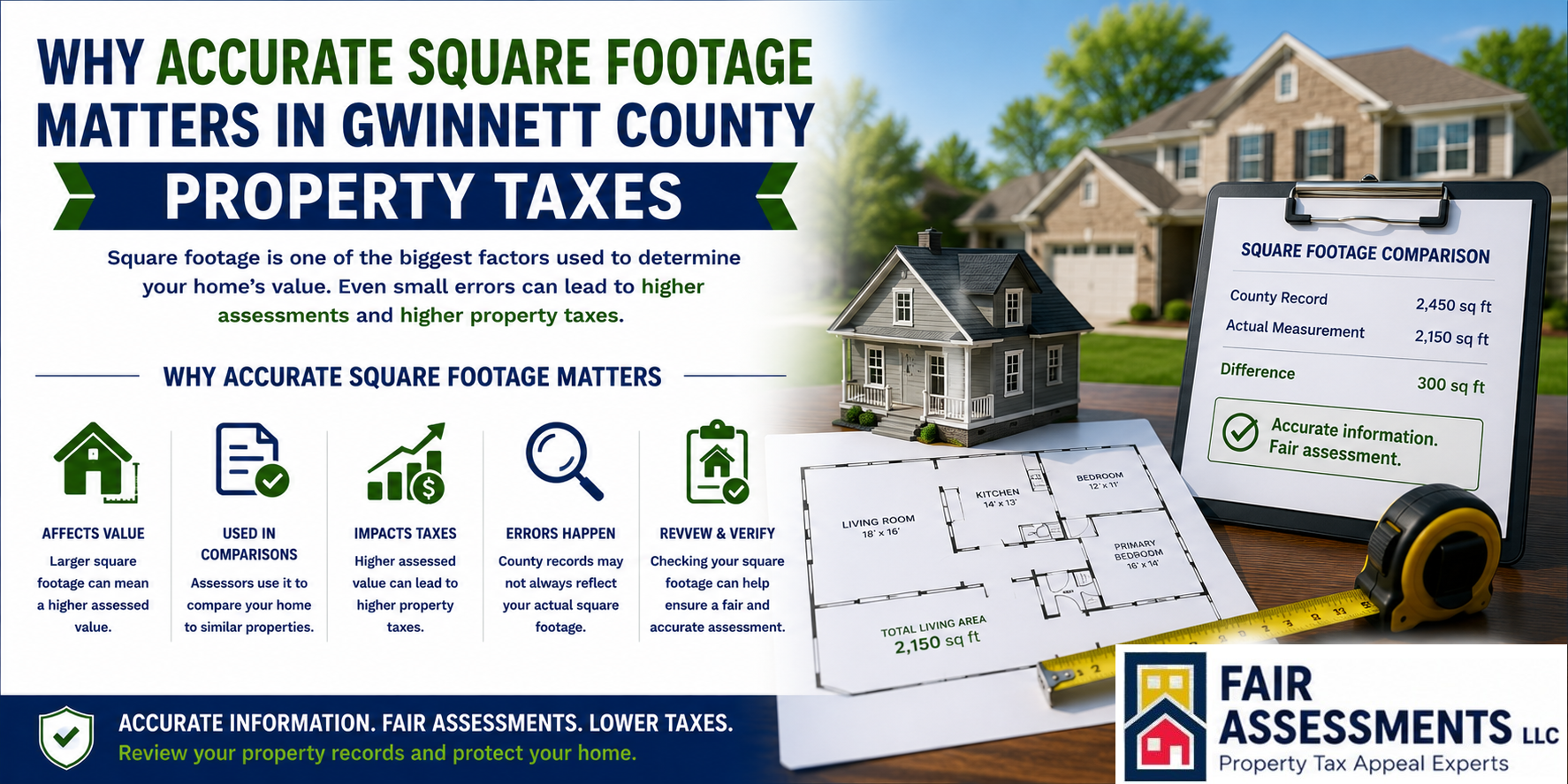
Heads up Gwinnett County propery owners! Time flys and the Gwinnett County Tax Assessor notices came out on April 5. The 45 day appeal period ends in nine days, on May 20th. You can file your Gwinnett County appeal electronically. You can file your appeal in person at 75 Langley Drive in Lawrenceville, GA. You can file your appeal by mail provided it is postmarked by May 20. I recommend you send your Gwinnett County appeal certified mail with a return receipt requested, if you choose to use the postal service.
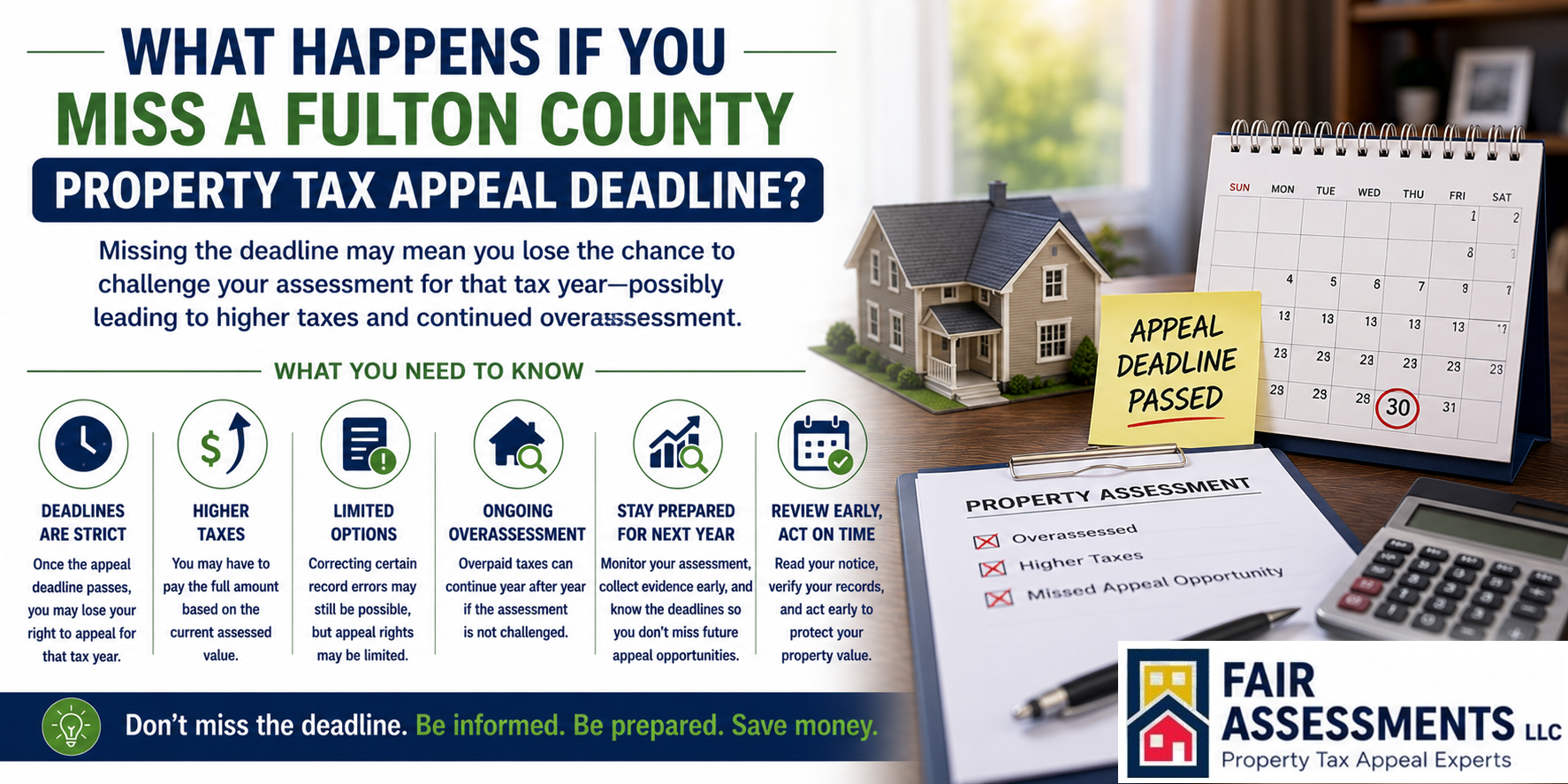
Many people ask me if there is anything we can do for them when they miss the Gwinnett County Tax Assessor appeal deadline. The answer is no, there is nothing we can do. The law in Georgia is clear, the time to appeal is within 45 days after the tax assessment notice date. Others wait until their tax bill comes out, and then wish they had taken steps to lower their tax burden. Again, we can do nothing at this point as there is no legal way to challenge a property tax bill, only the tax assessment.
If you need information on the Georgia tax appeal process you can get the Georgia Property Tax and Appeal Guide. Georgia added a couple of new property tax appeal options a few years ago during the height of the recession. The Georgia Board of Equalization is the free option available to you. The new Hearing Office option is basically a commercial property tax appeal option. Arbitration is another option which is similar to going to court, as the decision of the arbitrator is binding.
I recommend using the Georgia Board of Equalization option if you are a home owner. Although with the Board of Equalization you never know what you are going to get. These are three taxpayers from your county and they see the county appraisers day in and day out. I find it useful to negotiate with the county appraiser prior to the hearing and try to work out a settlement. You may not get the value you were hoping to get, but you may get a reduction you can live with.

The bells were tolling for the Fulton County Taxpayers Foundation in December of 2012 when the AJC reported that the nonprofit was on the verge of collapse. Apparently spending exceeded donations by a large margin and heads needed to roll. I reported in this blog that they had ended property tax appeal work at the Foundation.
However, I have spoken to two members of the Fulton County Taxpayers Foundation this week and the property tax appeal work has not ended. The problem was the Foundation was short on cash and unable to pay the appraisers that were working the appeals. The Foundation kept asking the Fulton County Board of Equalization to reschedule the appeals so they wouldn't incur the monetary obligation to the appraisers.
The Foundation received a cash infusion from some generous donors and the tax appeal hearings have been ongoing for the past several months. The appraiser staff has been cut however, and all of the appeals have been handled by my friend and former co-worker Stan Anderson. Stan and I worked at together at Fulton County approximately ten years ago.
Stan and the Foundation have asked for my assistance. Going forward the property tax appeal work of the Fulton County Taxpayers Foundation will be handled by Andersonrealestate and Fair Assessments. I look forward to serving the taxpayers of Fulton County and plan to help improve the property tax appeal processes at the Foundation.
If you plan to use the Fulton County Taxpayers Foundation for your 2013 property tax appeal I encourage you to secure your appeal soon after the Fulton County tax assessment notices come out, probably this month. In the past, members of the Foundation have paid for the appeal service when they get their Fulton County Board of Equalization hearing notice. However, this has put undue pressure on Stan and others to prepare for hearings at the last minute. Order your property tax appeal service early this year and ensure a quality property tax appeal presentation.

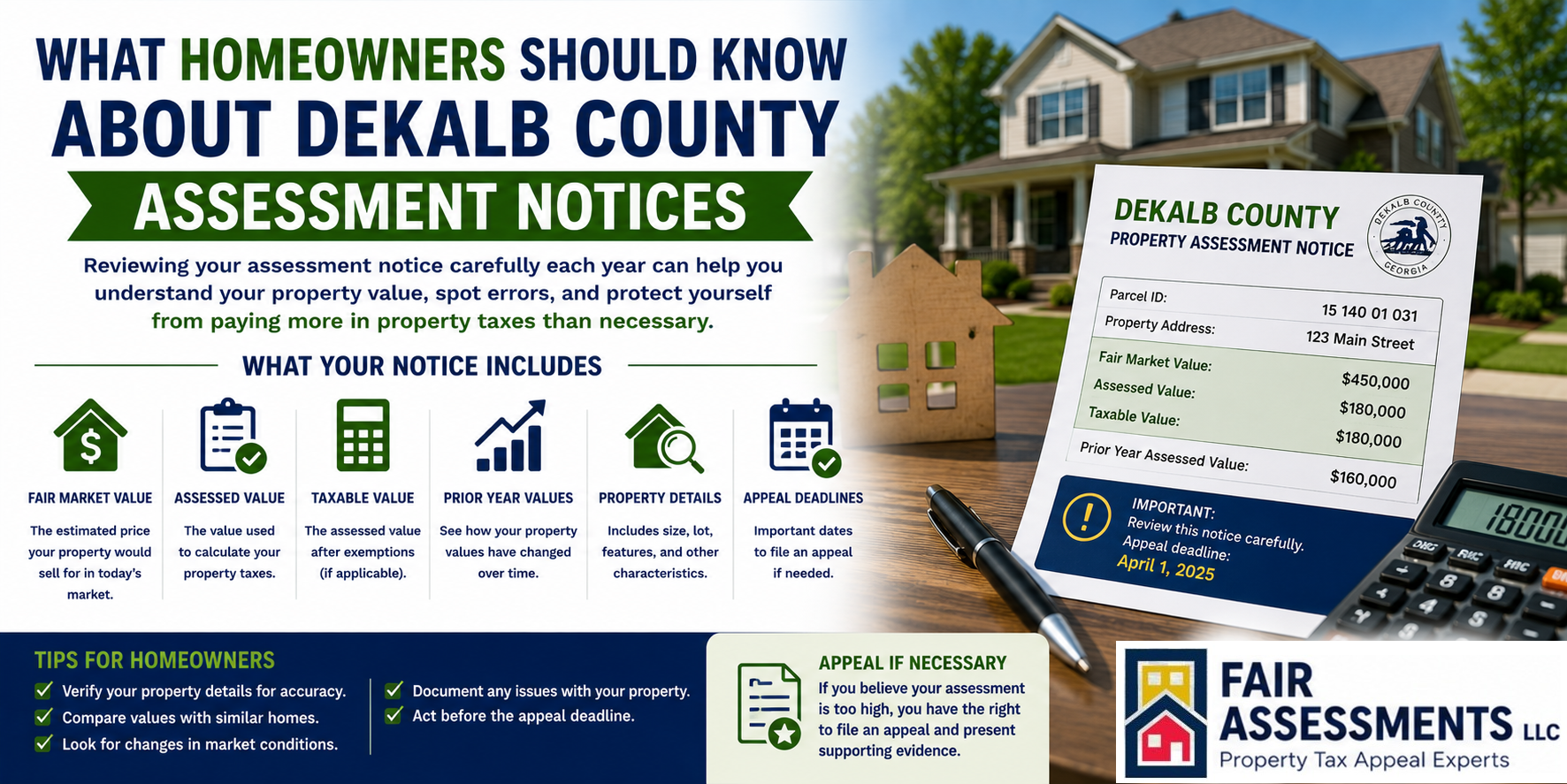
It is almost property tax appeal time again in DeKalb County GA. The DeKalb County tax assessor will be sending out 2013 property tax assessment notices soon. One of the DeKalb County appraisers told me a week ago that the envelopes were in but they weren’t quite ready to print the assessment notices yet. DeKalb County tax assessor is implementing a new mass appraisal system this year. This is a computer assisted mass appraisal system, which stores all of the property data and also has several different approaches to value built in so that they can appraise the property. It remains to be seen if they will get the property tax assessment notices out soon, or whether it will be a little later in the month. Last year DeKalb County tax assessor notices went out at the end of May.
The DeKalb County Board of Equalization is still holding hearings on 2012 values. They will probably continue holding hearings on 2012 values even after the 2013 values have been mailed. I think things at the DeKalb County Board of Equalization or moving along nicely, though. Compared to last year, going to the Board of Equalization is a dream. The past two years the hearings have been on a first-come-first-serve basis. Last year when you showed up early for a hearing you found scores of other people already there in a sweltering hot room. This year the Board of Equalization hearings appear to be moving along a little better and they are not scheduling nearly as many people on the same day.
Last year when the DeKalb County tax assessor put out 2012 notices it was noted by the Atlanta Journal-Constitution that the total tax digest, or the value of all taxable property in the County, had declined by 6%. As evidenced by the Case-Shiller home price index home values in the Atlanta Metropolitan area have risen sharply over the last 12 months. It will be interesting to see how many residential values are increased for tax year 2013.
On the commercial front capitalization rates have been declining since the height of the great recession. It seems logical to me that the DeKalb County tax assessor will be looking at commercial values for property types and market areas that need to be increased. Of course, the recovery has been very uneven, with only the highest quality properties, or institutional grade investments, selling for top dollar, while other less desirable properties languish on the market with higher vacancy rates and lower rents.
2013 may be the year that the DeKalb County tax assessor can finally start to raise values and increase the tax digest to help out DeKalb County budget process. Of course it’s politically incorrect to say that the tax assessor raises value for the benefit of the County budget. But if values are rising, that’s exactly what’s happening. Fair market value is the goal of the DeKalb County tax assessor and we are waiting to see where that is on all of the property in DeKalb County.

It is property tax appeal time in the great state of Georgia and Atlanta hotels have been through an awful time during the Great Recession. Although much of the commercial real estate sector is now on the upswing and cap rates have been falling, hotels still have some of the highest cap rates of any commercial property class. I know many hotel owners who continue to tell me that the hotel market is still bad. If your gross revenue is down and your operating expense ratio has shrunk, and there appears to be no end to your nonexistent net operating income, then the Great Recession is not over.
Real Estate Research Corporation (RERC) stated in their most recent report that demand for hotels and a lack of new supply makes the hotel sector a good investment opportunity. But they also went on to say that replacement cost is higher than value. As a result, development capital is not readily available. RERC's required pre-tax yield rate for the hotel sector decreased in the fourth quarter, although it retained the highest yield rate among the property sectors. According to Smith Travel Research fourth quarter hotel occupancy declined to 45.4%, a 7.2% year-over-year decrease, the average daily rate fell 1.6%, and revenue per available room declined 8.7% to $68.43. Apparently lack of new supply is not helping out the existing hotels.
RERC analyzes data for Atlanta hotels, but only first-tier investment properties, those that are new or newer quality construction in prime to good locations. First-tier hotels in Atlanta have a pre-tax yield estimate of 10.2%, a going-in cap rate percentage of 8.4%, and a terminal cap rate of 9.1%. For second-tier investment properties or Atlanta hotels that are aging, former first-tier properties in good to average locations RERC uses data from the whole Southern United States region. Here, the pre-tax yield ranges from 8% to 14%, with an average of 10.9%, the going-in cap rate ranges from 6.5% to 13% with an average of 9.1%, and a terminal cap rate of 7.5% to 14%, with an average of 9.8%. For third-tier investment properties or those properties that are older with functional inadequacies and or are located in marginal locations the pre-tax yield ranges from 8.5% to 15% with an average of 12%, the going-in cap rate ranges from 7.5% to 13% with an average of 10.3%, and the terminal cap rate ranges from 8% to 14%, with an average of 10.9%.
Realty Rates is another company that publishes cap rate information for commercial property types and their information is not broken down by city or region. They insist that their data, which is national in scope, closely mirrors what is happening in markets all over the country. For their surveyed cap rates Realty Rates reports that for full service hotels the minimum surveyed rate was 5.46% the maximum surveyed cap rate was 14.61%, and the average surveyed cap rate is 11.12%. For limited service hotels the minimum surveyed cap rate was 7.14%, the maximum surveyed cap rate was 17.41%, and the average surveyed cap rate was 11.74%.
Obviously the Realty Rates surveyed cap rate information is considerably higher than the RERC first tier cap rate information for Atlanta hotels. The Realty Rates full service and limited service average surveyed cap rates are both higher than the RERC average cap rate for third-tier properties. If your gross income is down and your operating expenses as a percentage of gross income are up perhaps you don't need to worry about the cap rate that's being used to generate your hotel value. However, if the question of value hinges on the selection of a cap rate, it is obvious that the higher Realty Rates cap rates will help out in a Atlanta hotel property tax appeal.
I have worked a lot of Atlanta hotels property tax appeals successfully and if you're not out of the woods yet, and you need help getting your property tax assessment reduced contact Fair Assessments. Although I have been in real estate valuation for over 20 years, including fee appraisal, mass appraisal, and property tax consulting, my business Fair Assessments is just two years old. Our client list is small but growing, and we will continue to provide the best service to those commercial property owners that choose to use our services.

You asked for the best and you got it! Property tax appeal options. In our continuing efforts to be the property tax appeal resource center we have established several options for single family residential property tax appeals. We know that some of you don't have the time or resources to develop a property tax appeal case and aren't all motivated by the same cost/benefit profile. As a result of numerous inquires on what we charge, and the desire for other payment options, we now have four different single family residential tax appeal services options.
For those that are averse to contingent fees because you dont know, ultimately, how much you will pay, we now have a Gold Level flat fee option. For a one-time $350 fee Fair Assessments will perform the work it is known for. Regardless of tax savings generated there are no additional fees (unless you want to file your appeal to court).
For those that like the idea of paying a smaller up-front fee, and only more if you get significant tax savings, we now have two different Silver Level contingent fee options. Our traditional option is $250 up-front and 25% of the tax savings generated. Our new contingent fee option is $175 up-front and 35% of the tax savings generated. This will give some of you additional incentive to let the professionals handle this for you.
For homeowners that like to "DIY" there is a do-it-yourself option. The Bronze Level is a market data support service, where we provide you with comparable sales and assessments that support a lower tax assessment. We provide you with this information for $99, but it is up to you to actually file the appeal, negotiate with the county appraiser, and attend the Board of Equalization hearing if you find it necessary.
This is the result of much thought and some hesitation. These appeal options will be available for tax year 2013 only. If one of the new options is very popular we will probably keep it around. If one or more options are not given much consideration, then they probably won't be available for tax year 2014. We will continue to roll with the changes and continue providing you with the information you need to file a successful property tax appeal.

The Hall County tax assessor sent out year 2013 property tax assessment notices on April 14. The appeal filing deadline for all counties in Georgia is now 45 days, so you have until May 27 to file a Hall County property tax appeal. A client of ours was thoroughly shocked when he got his 58% increase in Hall County, GA property tax assessment for tax year 2013. This was a community retail center, so it will be interesting to see if the Hall County tax assessor hit just certain property types, or whether many properties throughout Hall County, GA, were increased in value.
It is possible that the Hall County tax assessor is sticking it to commercial property owners and giving residential property owners a break. It has yet to be seen. During the recovery from the great recession the commercial real estate sector has been doing quite well, due to the low level of interest rates in the economy and institutional money seeking out higher rates of return with relative safety. Commercial real estate, especially the apartment sector has been especially desirable for institutional money and all commercial real estate capitalization rates have fallen since the height of the recession.
Of course residential real estate recovery is in the air and if you believe real estate agents it is now a sellers market. I guess it doesn't matter that lenders standards increased during the recession and haven't come down much. A large percentage of the US population is still ineligible for a traditional mortgage loan at this time. I don't see how there can be much of recovery until that changes. If you believe the Case-Shiller home price index Atlanta residential values are still at year 1999 levels.
During the real estate recession the Georgia Gen. assembly passed a moratorium on tax assessment increases in Georgia. That moratorium on increases ended with the 2012 tax year. Other than the Cobb County tax assessor I don't know of any county in the Atlanta Metro area that took it upon themselves to increase many values in 2012. Now we are one more year away from the recession and one more year into the so-called recovery, so you can bet that counties that didn't get efficient during the recession are chomping at the bit to increased tax revenue. I'm not pointing a finger at Hall County, Georgia. I'm just saying that's the way it is.
if you get a big increase in your Hall County tax assessment notice contact us about it. We will give you a free consultation, taking a look at your value, and letting you know whether you can benefit from our service. It's our mission to make sure everyone's assessment is fair and that's why we call ourselves Fair Assessments.

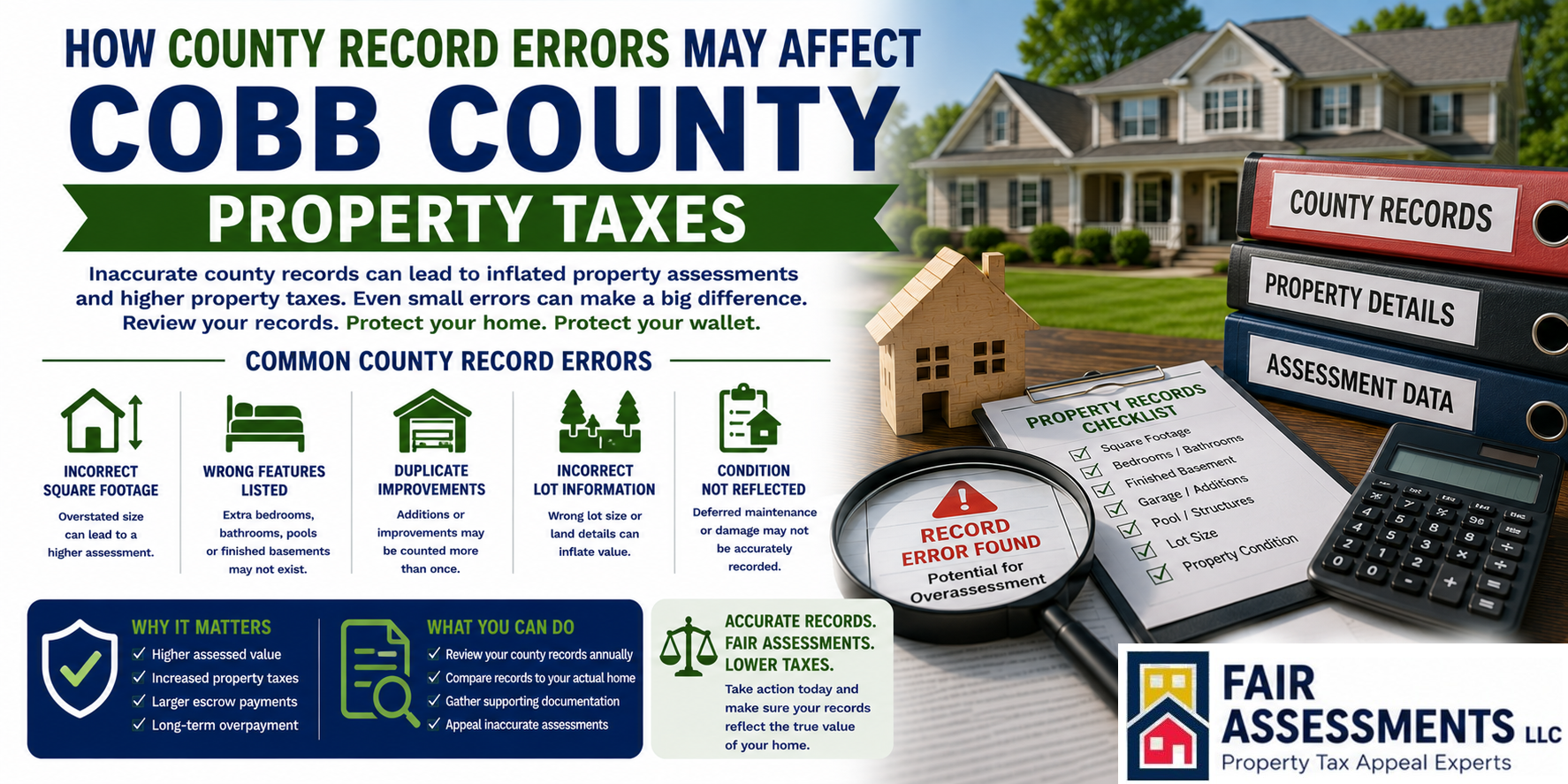
The Cobb County apartment market has been on fire in recent years due to the high number of foreclosures and families losing their homes. Despite attractive interest rates, home buyers remain on the sidelines due to stringent mortgage underwriting. It has really been the perfect storm for apartment communities. Now that the great recession is supposedly behind us and the Georgia tax assessors are able to increase values, you can expect apartments to be in the crosshairs of the Cobb County tax assessor.
In the fourth quarter of 2012 Real Estate Research Corporation shows that apartment properties in the Atlanta Metro area have an average going-in capitalization rate of 6.4%. This is the lowest capitalization rate that they reported for any commercial property class in the Atlanta area. This cap rate is for first tier investment properties, which are defined as new or newer quality construction in prime to good locations.
For second and third tier properties, Real Estate Research Corporation surveys by region, and the Atlanta area is in the South region. For second-tier investment properties, which are defined as aging, former first-tier properties, in good to average locations in the South region Real Estate Research Corporation shows an average going-in capitalization rate of 7.5% for apartments. For third-tier investment properties, which are defined as older properties with functional inadequacies and or marginal locations Real Estate Research Corporation shows that the average going-in capitalization rate for apartments is 8.6%. They also reported that apartment properties retained their top investment conditions rating among the various property types. It is interesting to note that the capitalization rate on third tier properties is nearly as low as the first tier properties of some other commercial property types (industrial flex and hotels at 8.4%).
Realty Rates is another service that surveys capitalization rates for different property types. Realty Rates does not break their data down into metro areas or regions, instead using an average for the entire country. They report there is little difference between their national numbers and cap rates at the local level. Realty Rates shows average surveyed capitalization rates of 8.8% for all types of apartment communities. The highest surveyed rate was 13.49% and the lowest surveyed rate was 3.95%. For garden apartments and suburban townhouse apartments the average surveyed rate was 8.04%. The highest surveyed rate was 12.12% and the lowest surveyed rate was 3.95%. This data from Realty rates is also taken from the fourth quarter of 2012.
According to Reis Inc. the apartment sector vacancy rate decreased 20 basis points to 4.5% during the fourth quarter of 2012 and net absorption was nearly 47,000 units. Asking and effective rents each grew by 0.6% during the fourth quarter. This is indicative of the continued strength in the apartment market and further evidence the Cobb County tax assessor will take note of before sending out 2013 tax assessment notices.

Gwinnett County Tax Assessor notices did go out on April 5th as evidenced by 28 assessment notices I have been sent. The appeal period in Georgia is 45 days in all counties and that makes the appeal deadline in Gwinnett May 20th. This is the last day that your property tax appeal can be postmarked or hand delivered.
I have value changes on approximately 14% of the notices that I have received. Two values decreased, two increased, and 24 had no change in value. No change in assessment isn't necessarily a blessing, especially if your value has remained unchanged for several years and it has not been appealed. In 2012 we appealed many values in Gwinnett County that hadn't changed since the start of the Great Recession. We were able to get most of these reduced.
Our hearts go out to the police officer and the firefighters that were injured in the standoff in Suwanee. The SWAT team and firefighters are brave souls. I thought it odd that the AJC reported that the house that was involved in the standoff was valued at $131,600 by the Gwinnett County Tax Assessor. I guess they were just trying to add something concrete to the neighborhood description they gave.
The Gwinnett County Tax Assessor raised values on two properties that were not taken to the Gwinnett County Board of Equalization. I obtained reductions from the county appraiser responsible for those market areas and accepted those reductions as reasonable. In Georgia, you can have your property tax assessment frozen for three years if the value is settled at the Board of Equalization (BOE) level of appeal. Because I obtained a satisfactory reduction prior to the BOE the county has every right to increase the value if they want to. Let this be a lesson.
There is plenty of time to secure a Gwinnett County property tax appeal, but don’t let that tax assessment notice end up at the bottom of a pile of “not urgent” mail on May 26th. Many people get their tax bill at the end of the summer and wonder if there is anything they can do about it. The sad fact is there is nothing you can do about it. The time to secure a lower tax bill is now, not when the tax bills have been printed and mailed.
Fair Assessments is here to stay. I have been in this business for nine years, full-time. Fair Assessments is 2.5 years old but we have all the experience that nine years of property tax consulting brings. You can check out my experience at Linkedin. To get your property tax appeal started, or do some research for your own appeal go to Fair Assessments.